MANDERA– The livestock sector is facing heightened risk of animal deaths as drought conditions intensify across Kenya’s arid and semi-arid lands (ASALs), with pasture and water resources continuing to decline.
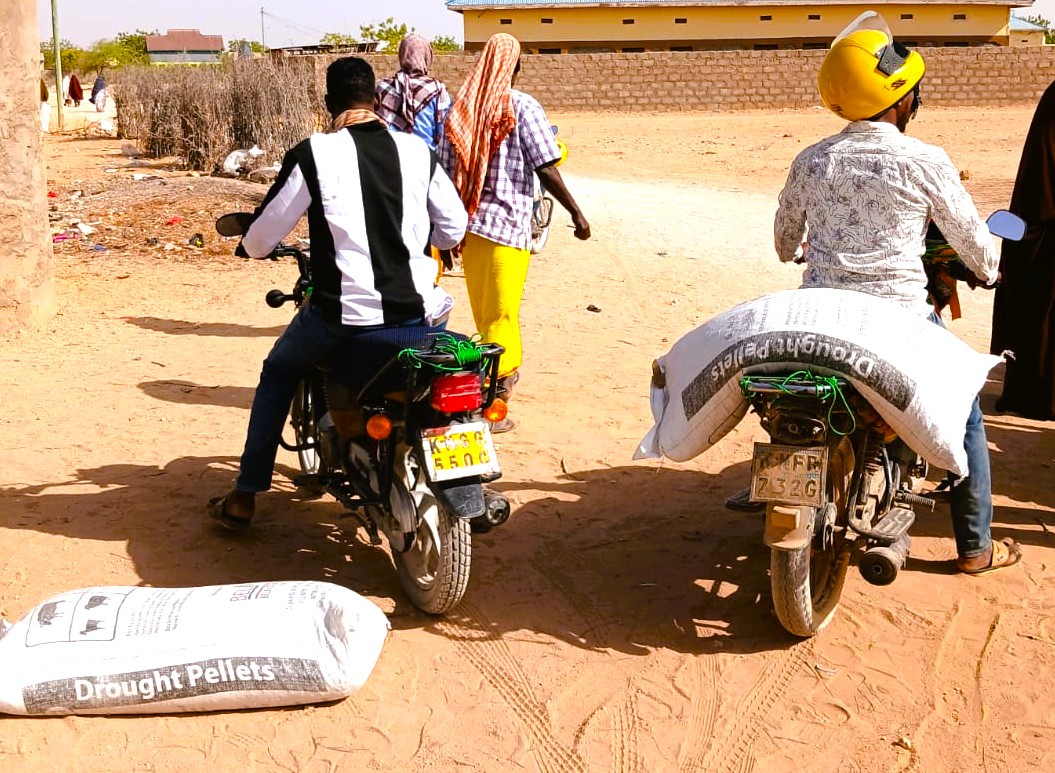
To cushion pastoral communities from further losses, the National Government, through the National Drought Management Authority (NDMA), has prioritised the distribution of livestock supplementary feed — commonly known as Drought Pellets — as a key drought response intervention.
The programme is financed under the National Drought Emergency Fund and targets counties hardest hit by the ongoing dry spell, including Mandera.
Mandera County, currently classified in the ‘Alarm’ drought phase, is among the most affected areas. In response, NDMA has allocated 10,080 bags of Drought Pellets (50kg each) for distribution across Mandera North, Mandera South, Lafey, Mandera West, Banisa and Mandera East sub-counties.
Other counties benefiting from the intervention include Wajir County, Garissa County, Marsabit County, Isiolo County, Turkana County, Tana River County, Kilifi County and Kwale County.
The National Drought Management Authority (@NDMA_Kenya ), with support from the National Government through the National Drought Emergency Fund, is distributing 10,080 bags (50kg each) of livestock supplementary feed (Drought Pellets) in Mandera County.
The allocation covers… pic.twitter.com/Ru0IWk9j1M
— Frontier Online (@FrontierOnlineK) February 23, 2026
Formulated and introduced by NDMA in 2017, the Drought Pellets are high-quality, nutrient-dense supplementary feed rich in protein and energy.
They are specifically designed to maintain livestock body weight and condition when natural forage becomes scarce.
The feed targets core breeding and milking herds that remain within settlements after larger herds migrate in search of pasture and water. By safeguarding these animals, the intervention helps sustain household milk production — a critical source of nutrition for children, women and the elderly.
According to NDMA, a single 50kg bag of Drought Pellets can support one cow for approximately 25 days at a feeding rate of 2kg per animal per day.
For sheep and goats, the recommended feeding rate is 0.5kg per animal per day, making the pellets an efficient and strategic intervention during periods of severe pasture deficit.
The initiative aims to stabilise pastoral livelihoods, protect core breeding stock, and prevent distress livestock losses in the most affected regions. By preserving productive animals, the government seeks to reduce the long-term economic and food security impacts of recurrent drought in ASAL counties.
As climate variability continues to pose significant challenges, authorities say timely livestock support remains essential in strengthening community resilience and safeguarding the pastoral economy.