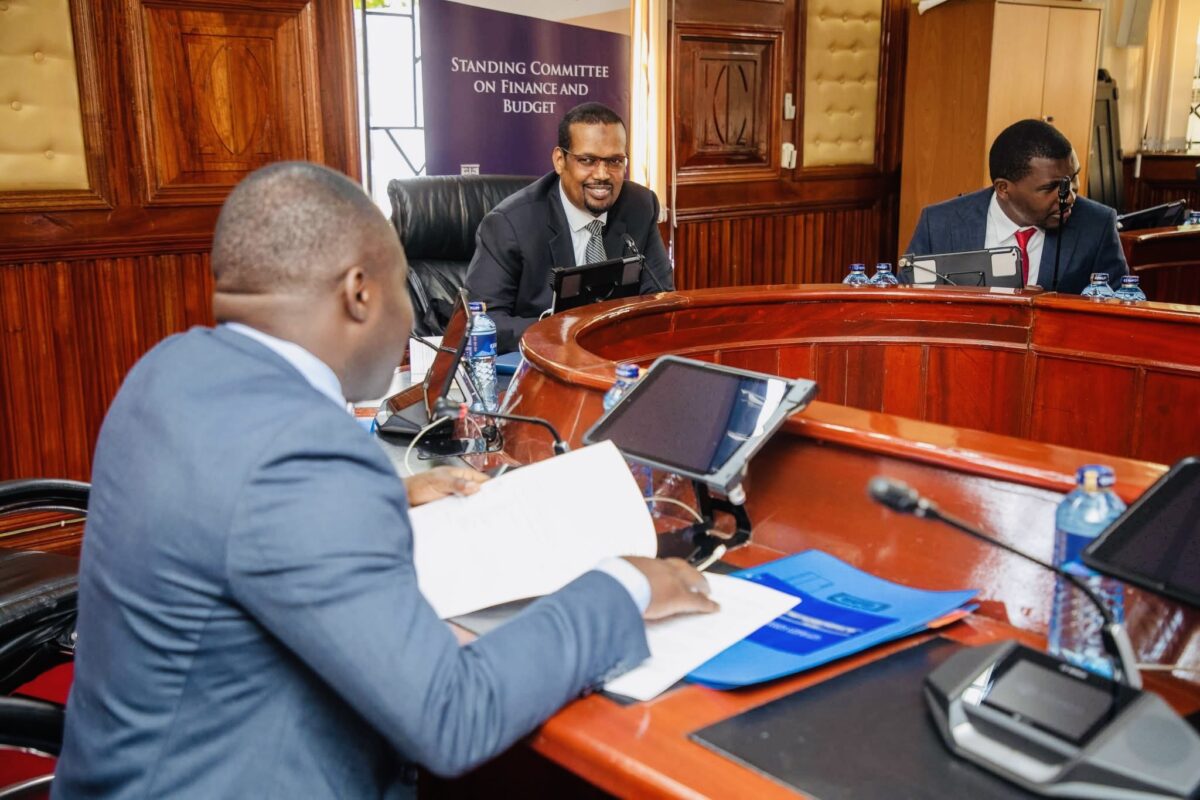
In a decisive move to safeguard Kenya’s fiscal future, the Senate Standing Committee on Finance and Budget convened today at Parliament Buildings to interrogate a critical report from the National Treasury on all new loans contracted by the Government between January 1st, 2025, and August 31st, 2025.
During the deliberations, Senators highlighted that while the country’s total debt reached 12.2 trillion shillings by December 2025, there remains a pressing need for the Senate to have a bird’s eye view of the legal and contractual risks embedded in these multi-billion shilling agreements.
Led by Mandera Senator Ali Roba, the Committee decried the fact that this is the first time in four years the Senate is receiving such debt information, contrary to the law.
Members underscored the urgent need for transparency regarding the legal frameworks governing these loans.
“This is the first time in four years that we are receiving information on the debt position contrary to the law. For me, the numbers are not alarming if you look at the economic performance of other countries. However, the National Treasury should submit this information so that we can safeguard the fiscal space for future generations,” Senator Ali Roba submitted.
Migori Senator Eddy Oketch and other members pushed for total disclosure on market instruments, insisting that all guaranteed obligations must be formally recognized as contingent liabilities to prevent a hidden debt crisis.
“The National Treasury should provide the Senate with total disclosure of these contractual agreements and legal frameworks so that we can have a bird’s eye view of the situation at hand,” Senator Eddy Oketch, a member of the Committee, added.
The Vice Chairperson, Senator Tabitha Mutinda, further requested comprehensive data on IMF and World Bank loans to ensure that parliamentary representatives are fully equipped for upcoming international fiscal meetings.
The Committee expressed deep concern over the rising domestic debt, which increased by 1.747 trillion shillings, and the heavy reliance on expensive commercial borrowing.
To address these high costs, the Senate suggested exploring strategies for loan renegotiations and buybacks to reduce the interest burden on the Kenyan taxpayer.
Kisii Senator Richard Onyonka raised serious concerns regarding the disparity in interest rates, questioning why the government had secured commercial loans at rates as high as 14% when multilateral options, like the African Development Bank, offer significantly lower rates of 3% to 4%.
“I wish that the National Treasury could tell us why they borrowed some loans at 14% while the African Development Bank’s rate is usually three to four percent. We need to renegotiate these same loans at lower interest rates,” Senator Onyonka counselled.
Beyond interest rates, the FinanceCommittee focused heavily on the government’s shift toward securitization, such as the proposal to securitize 7 billion shillings from the Road Maintenance Levy Fund to raise 170.5 billion shillings.
Concluding the deliberations, the Committee issued a 60-day ultimatum to the National Treasury to submit a detailed report covering the full risk profiles, contractual agreements, and fiscal implications of all structured financial instruments.
Senators underscored that their primary duty is to safeguard the fiscal space for future generations by asking the tough questions today and ensuring that every shilling borrowed is transparently accounted for and sustainably managed.