By Hassan Adan
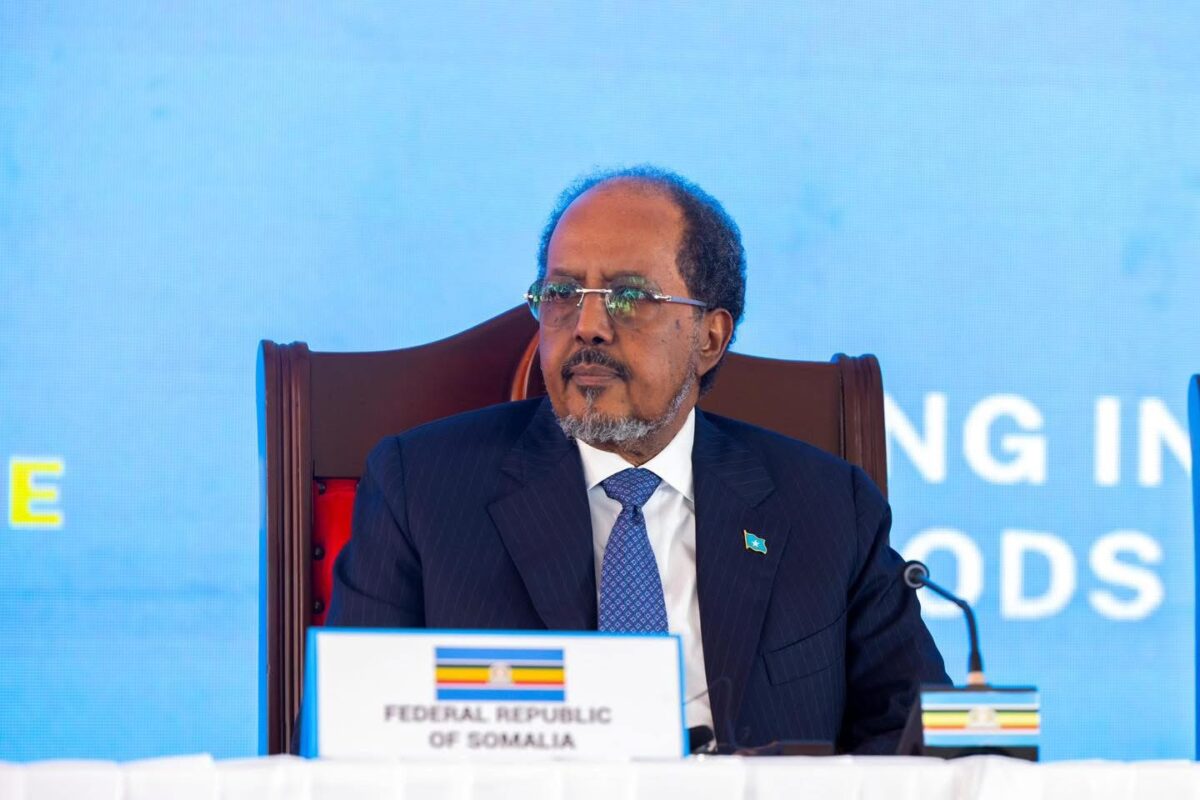
Somali President Hassan Sheikh Mohamud has defended his government’s push to introduce one-person, one-vote elections, arguing that Somalia’s long-running clan-based indirect electoral system has repeatedly fueled political violence, arrests, and instability.
Speaking in Mogadishu after receiving the credentials of the new Ambassador of Djibouti to Somalia at Villa Somalia, President Mohamud said Somalia could no longer rely on an electoral model in which political leaders are selected by clan delegates and lawmakers rather than by ordinary citizens, as the country pushes ahead with sweeping constitutional and political reforms.
“Have there ever been indirect elections that have not resulted in deaths?” Mohamud said, citing past political disputes in Baidoa, Garowe, Dhuusamareeb, and Mogadishu.
He said those contests led to deaths, arrests, and political confrontation.
Mohamud said direct elections would allow Somali citizens to freely choose their representatives and help move the Horn of Africa nation away from a political system dominated by clan negotiations and elite bargaining.
For more than two decades, Somalia has used an indirect electoral model under which traditional clan elders select delegates, who in turn choose members of parliament. Lawmakers from both houses of parliament then elect the president, rather than the public casting ballots directly.
Mohamud himself returned to office in May 2022 through that process, winning the presidency after securing 214 votes from lawmakers in a parliamentary ballot involving 329 legislators from both houses of parliament.
The president said his administration is now working to replace that model with universal suffrage as part of a broader political transition that also includes constitutional reforms and the creation of a multiparty political system.
Mohamud also pushed back against opposition claims that his constitutional mandate expired this year, saying the terms of Somalia’s federal institutions will now end on May 15, 2027.
“The term of the Federal Parliament of Somalia and the Federal Government of Somalia, headed by the president, ends on May 15, 2027,” he said.
The government says the new timeline is based on constitutional amendments formally launched this year, which extended federal terms from four years to five years and introduced direct popular elections under a presidential system.
The remarks come as Somalia faces one of its most serious political disputes in recent years, with opposition leaders rejecting the constitutional amendments and accusing the government of pushing through major reforms without broad political consensus.
Tensions escalated after three days of talks between the federal government and representatives of the Somali Future Council ended without agreement in Mogadishu on May 15, with discussions centered on elections, constitutional reforms, and the country’s political transition.
The African Union Commission and the United Nations have since urged Somali leaders to return to negotiations, warning against hardened positions after the talks ended without consensus.
The standoff over Somalia’s electoral future has emerged as a major test for Mohamud’s administration, with the government insisting direct elections are essential for democratic legitimacy, while critics warn that unilateral reforms could deepen political divisions in the fragile nation.