By Hassan Adan
𝗦𝗜𝗠𝗔𝗗 𝗨𝗻𝗶𝘃𝗲𝗿𝘀𝗶𝘁𝘆 has formally adopted an 𝗔𝗿𝘁𝗶𝗳𝗶𝗰𝗶𝗮𝗹 𝗜𝗻𝘁𝗲𝗹𝗹𝗶𝗴𝗲𝗻𝗰𝗲 𝗣𝗼𝗹𝗶𝗰𝘆 𝗙𝗿𝗮𝗺𝗲𝘄𝗼𝗿𝗸 to govern the use of AI in teaching, research and university administration, as Somalia moves to establish a more structured approach to a technology rapidly reshaping education and the economy.
The framework was developed by the 𝗦𝗜𝗠𝗔𝗗 𝗔𝗜 𝗜𝗻𝘀𝘁𝗶𝘁𝘂𝘁𝗲 and approved by the University Council.
It is designed to promote responsible AI adoption while protecting academic integrity, transparency, privacy and human oversight.
The policy comes as generative AI tools become increasingly embedded in universities worldwide, creating opportunities to improve learning and research while raising concerns over plagiarism, fabricated information, authorship, data protection and excessive reliance on automated systems.
SIMAD said the framework is intended to ensure that AI supports rather than replaces human judgment, creativity and academic responsibility.
𝗗𝗿. 𝗬𝗮𝗵𝘆𝗲 𝗔𝗯𝘂𝗸𝗮𝗿 𝗔𝗵𝗺𝗲𝗱, Director of the SIMAD AI Institute, said the policy gives the university a clear institutional framework for navigating the opportunities and risks associated with AI.
“Artificial intelligence is transforming higher education, and our responsibility is not simply to adopt these technologies, but to ensure that they are used responsibly, ethically and in ways that strengthen human capacity. This policy provides SIMAD with a clear framework for embracing innovation while protecting academic integrity, transparency and the essential role of human judgment.” Dr Yaxye Abubakar told the Media during an interview.
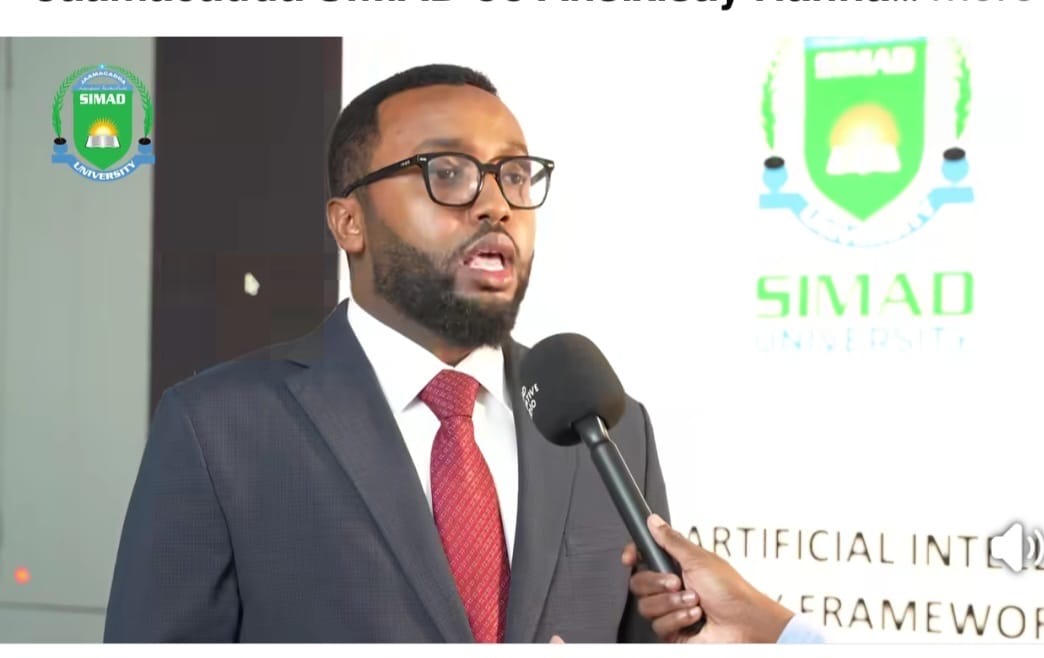
SIMAD AI Director Yahye Abukar Ahmed addresses the media following the University Council’s approval of the Artificial Intelligence Policy Framework, which will guide the use of AI in teaching, research and university administration.
The framework places emphasis on human-centred AI, academic integrity, transparency, accountability, privacy and critical thinking.
It sets expectations for students and academic staff using AI for educational and research purposes, while distinguishing legitimate assistance from presenting AI-generated material as original academic work.
It also establishes safeguards for the use of AI in research and administration, including human oversight, protection of confidential information and responsible handling of personal and research data.
The policy was prepared by the SIMAD AI Institute, which is the Somalia’s first university-based artificial intelligence institute.
According to Director Yaxye the institute was established to advance AI learning, research, innovation, policy development and ethical technology adoption, while bringing together researchers, students, policymakers and development partners.
Its work has included efforts to build local AI capacity and explore applications relevant to Somalia, including education, governance, research, agriculture, health, climate resilience and digital technologies.
The institute has also organised training and policy discussions with Somali universities and international partners, focusing on AI readiness, academic integrity, responsible generative AI and the implications of artificial intelligence for higher education.
SIMAD’s policy comes as Somalia begins moving from discussions about AI’s potential toward governance, regulation and responsible deployment.
The Federal Government, working with UNESCO, has been undertaking an AI Readiness Assessment to examine the country’s capacity to adopt artificial intelligence and help inform the development of a national AI policy framework.
In June, the 𝗦𝗜𝗠𝗔𝗗 𝗔𝗜 𝗜𝗻𝘀𝘁𝗶𝘁𝘂𝘁𝗲 and the 𝗢𝗳𝗳𝗶𝗰𝗲 𝗼𝗳 𝘁𝗵𝗲 𝗣𝗿𝗶𝗺𝗲 𝗠𝗶𝗻𝗶𝘀𝘁𝗲𝗿 hosted a discussion on “𝗦𝗼𝘃𝗲𝗿𝗲𝗶𝗴𝗻 𝗔𝗜 𝗳𝗼𝗿 𝗦𝗼𝗺𝗮𝗹𝗶𝗮,” bringing together policymakers, academics and technology stakeholders to examine how Somalia can build domestic capacity and develop a strategic approach to AI.
The discussions have highlighted issues including digital infrastructure, data governance, cybersecurity, local talent and the need for Somalia to participate in developing AI solutions rather than remain primarily a consumer of technologies created elsewhere.
The university’s move reflects a broader global debate over how higher education institutions can benefit from AI without undermining academic standards.
AI tools can assist students with research, explain complex concepts, analyse information and support academic writing.
At the same time, universities are confronting questions over plagiarism, inaccurate or fabricated AI-generated content, authorship and the erosion of critical thinking.
Somalia has limited digital infrastructure and a shortage of specialised technology skills, making capacity-building an important part of the country’s AI transition.
SIMAD has increasingly incorporated artificial intelligence into its academic and innovation agenda, with programmes aimed at preparing lecturers and students for an increasingly technology-driven labour market.
The SIMAD AI Institute has also promoted research into locally relevant AI applications, including Somali-language technologies and digital solutions for education and public services.
The adoption of the policy gives SIMAD a formal institutional framework as Somalia’s AI ecosystem develops and strengthens the university’s ambition to become a centre for AI education, research, innovation and policy dialogue in Somalia and East Africa.