By Hassan Adan
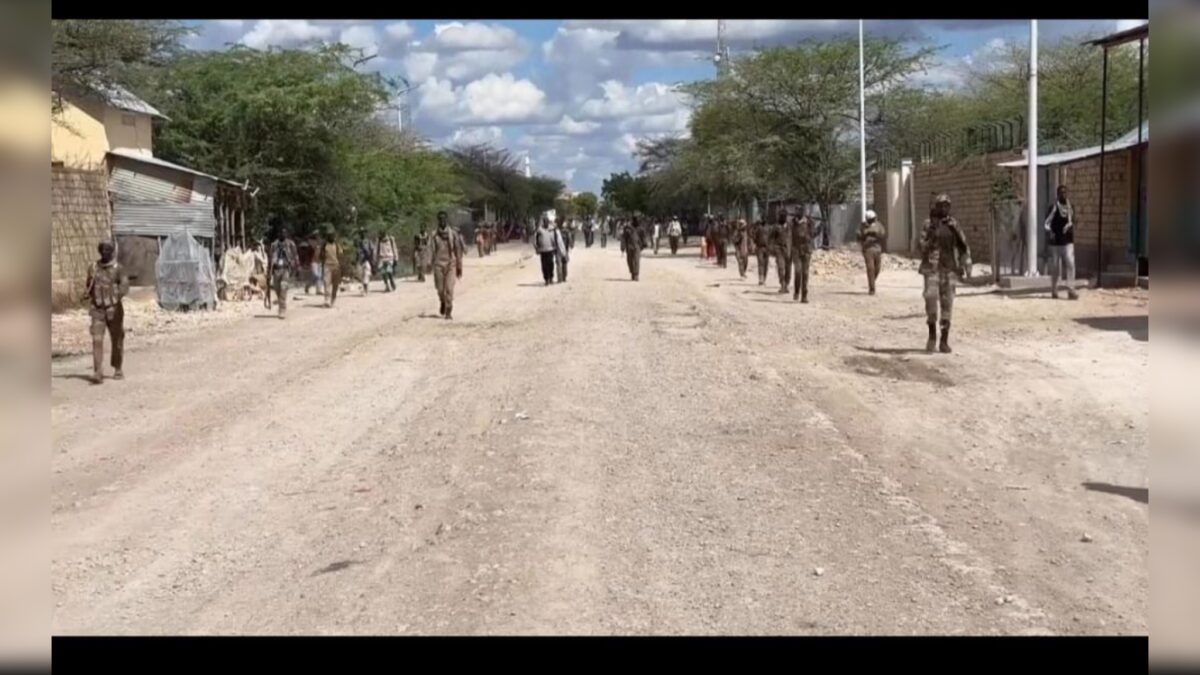
Heavy fighting erupted in Baidoa on Monday as Somali federal forces clashed with armed groups loyal to former South West State president Abdiaziz Hassan Mohamed Laftagareen, leaving civilians caught in the crossfire and reigniting a political crisis that has destabilised the regional capital for months.
The fighting began in the early hours, with residents reporting intense gunfire and explosions across parts of the city.
A Frontier Online Media reporter in Baidoa saw wounded people being transported through the streets as the fighting continued, while residents said civilians were forced to remain indoors.
Somalia’s Defence Ministry said federal troops had come under attack before dawn and succeeded in pushing the attackers out of Baidoa.
The ministry said about 30 fighters were killed and weapons and military equipment were recovered, but the government’s casualty figure could not be independently verified.
Laftagareen-aligned forces have maintained that they were engaged in a struggle to restore what they consider the legitimate South West State administration, while federal authorities have portrayed the operation as a successful response to an armed attack.
Local accounts indicated that civilians and soldiers were among those killed, although the overall death toll remained unclear.
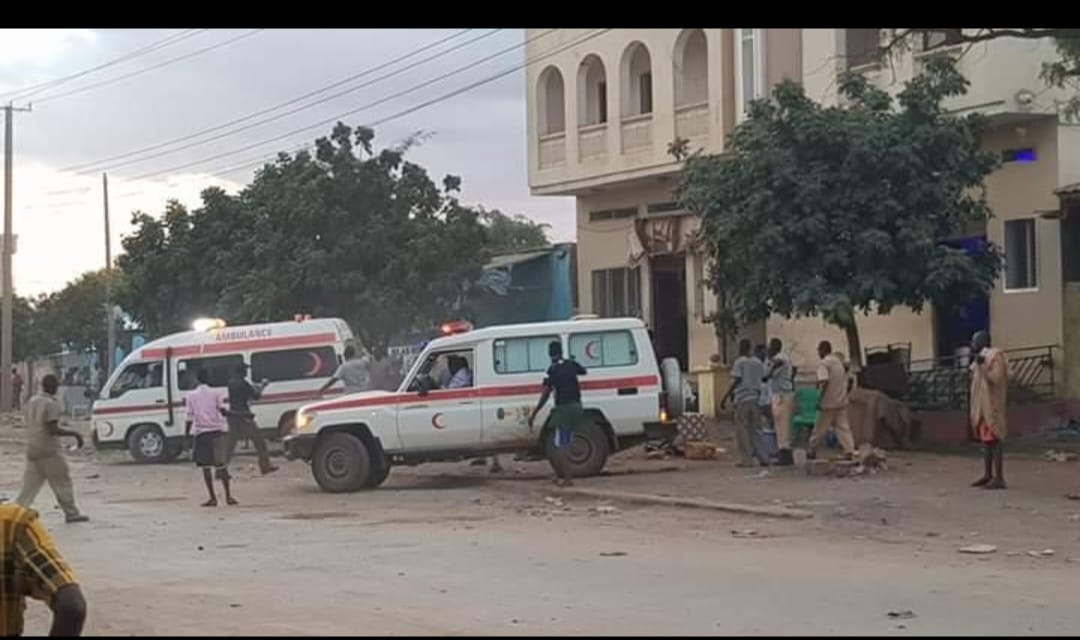
Ambulances arrive as people gather outside a medical facility in Baidoa following heavy clashes between federal forces and rival fighters local to Laftagareen.
The latest clashes are considered the most serious fighting in Baidoa since federal forces seized control of the city in March.
The confrontation between Mogadishu and Laftagareen intensified in March this year after South West State broke ties with the federal government amid disputes over elections, constitutional changes and the federal government’s role in the affairs of the regional state.
Laftagareen was re-elected for another five-year term in Baidoa in late March, a process rejected by the federal government.
Days later, federal forces moved into Baidoa and took control of the city.
On March 30, Laftagareen announced on his official Facebook page that he had resigned as president of South West State.
Laftagareen later disputed that account.
In an interview with Somali media in Nairobi in May, The former south west leader said he remained the legitimate president of South West State and claimed that he had not voluntarily resigned.
He said the resignation statement posted on Facebook was made after his personal assistant received several telephone calls from officials within the federal government.
According to Laftagareen, the assistant was pressured to publish the statement without first consulting him.
Laftagareen also said his life was in danger at the time and that he was unable to leave Baidoa safely.
He portrayed the announcement as an attempt to prevent further bloodshed rather than a genuine decision to surrender his position.
The political vacuum created by Laftagareen’s departure eventually led to a new leadership contest.
On June 10,this year Sheikh Adan Mohamed Nur “Madobe” was elected president of South West State in a vote held in Baidoa.
Somalia’s federal government welcomed the election, with Prime Minister Hamza Abdi Barre congratulating Madobe and describing his election as an important political development.
The election, however, did not resolve the dispute over the legitimacy of the South West administration.
Laftagareen continued to insist that his removal had not been lawful and that he remained the legitimate leader of the state.
The unresolved political dispute has now taken on a military dimension, with fighters loyal to Laftagareen again confronting federal forces in the streets of Baidoa.
Baidoa Town is one of the largest humanitarian centres and hosts a huge population of people displaced by conflict, drought and food insecurity.
A recent assessment by Médecins Sans Frontières found that one in four children screened at displacement sites in Baidoa was severely malnourished, underscoring the vulnerability of communities now exposed to renewed insecurity.
The fighting also risks disrupting humanitarian operations and further restricting movement in and around a city that serves as a major aid hub for southern Somalia.
The latest clashes in Baidoa comes as Somalia continues its campaign against Al-Shabaab, which maintains a presence in parts of the surrounding Bay region.