By Hassan Adan
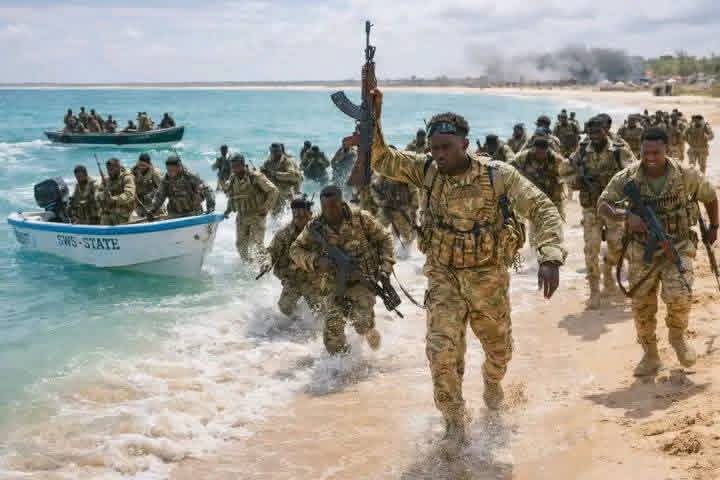
MOGADISHU- Fighting broke out between Somali federal government forces and troops loyal to the regional administration of South West State, with federal units taking control of the coastal town of Barawe after heavy clashes with regional forces.
Residents and local officials described exchanges of gunfire and troop deployments across key positions before the town fell under federal control.
Photos seen by Frontier Online Media showed South West State forces retreating by boat along the coast after being overpowered by federal troops. The fighters later arrived in Kismayo, in Jubaland State, where they were received by local authorities.
Doctors at Digfeer and Madina hospitals in Mogadishu said they received several wounded fighters from both federal government and South West State forces following the intense overnight fighting in Barawe.
Medical staff who spoke to Frontier Online Media said emergency units treated casualties with gunshot and shrapnel injuries as the clashes subsided. Independent verification of casualty figures was not immediately possible.
In Baidoa, security officials said they could not immediately confirm casualty figures but reported capturing several clan militias involved in overnight clashes on the outskirts of the city.
Regional officials framed the detentions as part of what they described as defensive operations against federal incursions.
Residents described scenes of panic as heavy machine-gun fire echoed across neighborhoods, forcing families to flee their homes.
“People here are carrying their belongings on their backs as mothers hold and drag crying children by the hand,” Abdullahi Nur, a local resident, told Frontier Online Media by phone.
As he spoke, the sound of heavy weapons could be heard in the background.
“I can’t continue the interview machine-gun pellets are landing next to me,” he said moments before the line went dead.
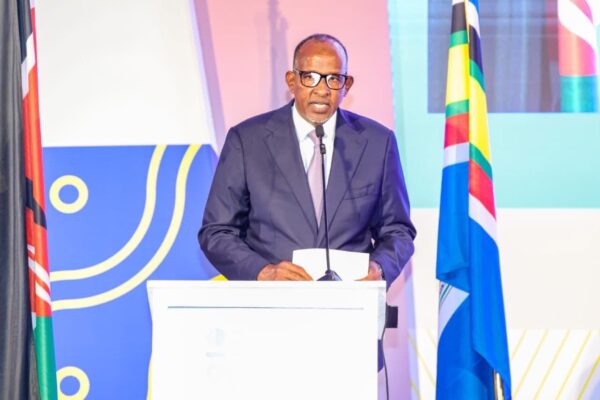
Tensions escalated further when South West State authorities barred the Speaker of the House of the People, Sheikh Adan Mohamed Nur (Adan Madoobe), from landing in Baidoa.
Officials said his aircraft was turned back mid-air.
Regional officials alleged the speaker’s visit risked worsening instability.
“He is among figures contributing to political disorder within the state,” one senior official said, adding that the administration could not guarantee security conditions for the visit.
Political sources say Adan Madoobe is viewed as a potential presidential contender and is seen by regional authorities as aligned with federal political interests — claims that have not been publicly addressed by his office.
South West officials also accused certain federal ministers from the region of mobilizing clan-based fighters and coordinating with federal authorities in Buur Hakaba, about 60 kilometers east of Baidoa.
They alleged that armed groups had gathered there in preparation for operations against the regional administration.
A senior regional security commander, speaking on condition of anonymity due to the sensitivity of the situation, accused the federal government of backing irregular forces.
“Yes, the federal authorities are financing clan militias, and forces sustained by public funds are being directed against this administration,” the commander said. “We will resist using all lawful means available to us.”
South West State President Abdiaziz Hassan Mohamed Laftagareen accused unnamed federal officials of undermining his administration and politicizing security matters.
“We are facing actions that erode the federal arrangement and threaten the safety of our citizens,” Laftagareen said. “Our institutions cannot accept political disputes being settled through force.”
The federal government has not issued a detailed public response to the latest clashes and allegations but has previously called for dialogue with federal member states.
The confrontation comes amid wider political strain. Several federal ministers have resigned in recent days, citing unresolved disagreements between the central government and regional authorities.
South West State recently announced it was suspending cooperation with the federal administration, echoing earlier positions taken by Puntland and Jubaland, whose leaders have also voiced grievances over federal policies.
The feud traces back to disputes over constitutional amendments and the electoral framework.
Opposition figures and some regional leaders accuse the federal government of advancing changes to Somalia’s provisional constitution without broad consensus, deepening mistrust across the country’s federal institutions.
The current federal government’s legal mandate is set to expire on May 15, yet uncertainty persists over whether elections can be held on time.
Somalia uses an indirect electoral model in which clan elders select 101 delegates who vote to choose members of parliament representing their communities.
Those lawmakers then elect the president through a secret ballot in parliament.
The current government has proposed transitioning to a one-person, one-vote system for future parliamentary and presidential elections, but many opposition figures and regional leaders argue that the plan is not feasible within the remaining timeframe due to legal, logistical, and security constraints.