By DPCS
Kenya is aiming to reduce its trade deficit with China, currently standing at just over Sh500 billion, through expanded exports under a new zero-tariff agreement, Deputy President Kithure Kindiki
said.
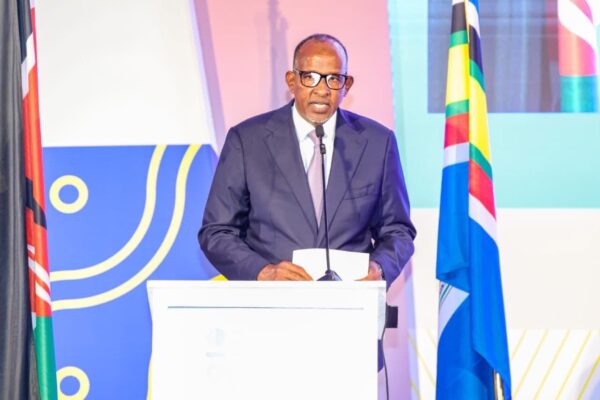
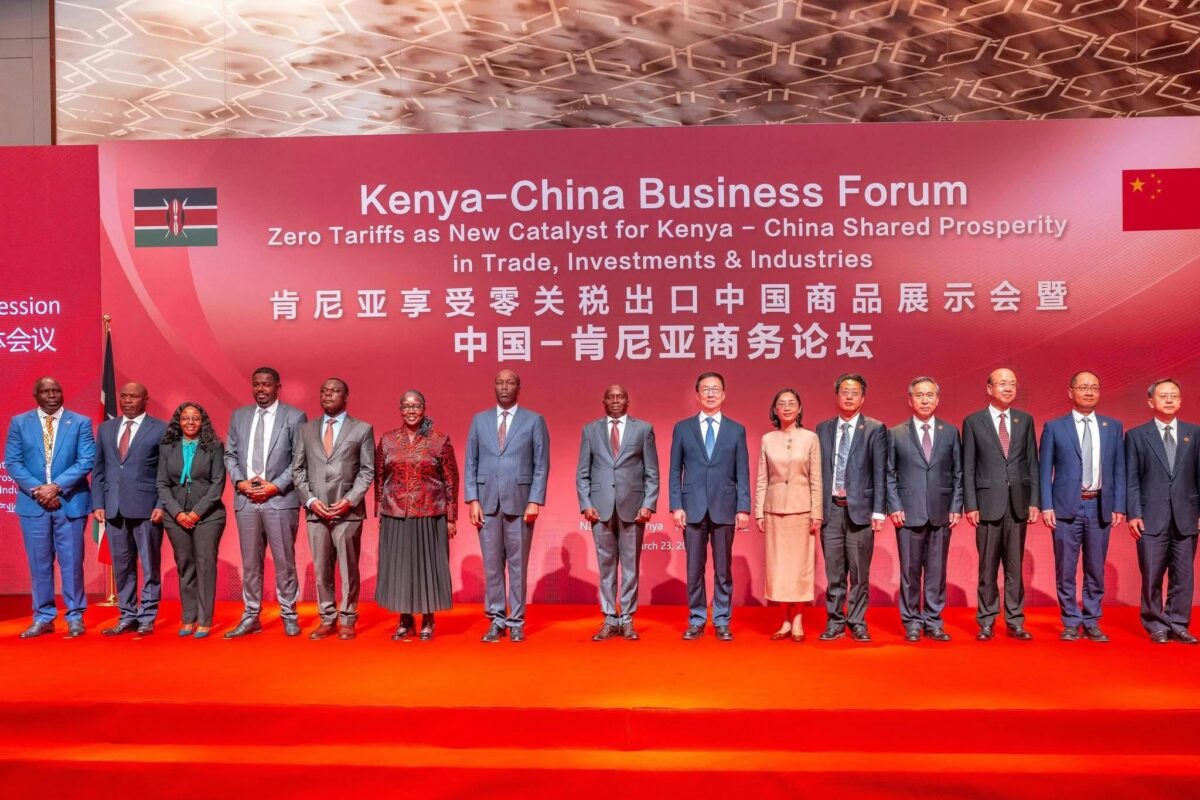
Speaking at the High-Level Kenya-China Business Forum in Nairobi on Monday, attended by China Vice President Han Zheng, Prof. Kindiki highlighted the long-standing bilateral ties between Kenya and China since independence in 1963. He noted that despite these strong relations, Kenya’s trade deficit with China remains significant.
“Our shared objective is to expand Kenya’s exports to the Chinese market, particularly value-added agricultural products, scale up the value chain, increase manufacturing cooperation, and move towards a more balanced trade between our two economies,” the Deputy President said.
Targeted interventions in agriculture have boosted production in key subsectors such as coffee, tea, avocados, and macadamia nuts, Prof. Kindiki added, calling for increased focus on these sectors to grow exports to China.
“Kenya produces some of the world’s finest coffee and tea, is Africa’s largest avocado producer, and the continent’s second-largest macadamia producer. We encourage our Chinese partners to increase imports of coffee, tea, avocados, nuts, fish, and other products,” he stated.
Currently, Kenya’s exports to China are valued at USD 0.21 billion, while imports from China stand at USD 4.32 billion, creating a trade deficit of approximately USD 4 billion.
To address this imbalance, President William Ruto and Chinese President Xi Jinping signed a Framework Agreement on Economic Partnership for Shared Development in April 2025, allowing Kenyan products zero-tariff access to the Chinese market starting May 1, 2026.
Prof. Kindiki challenged the private sector to seize the zero-tariff opportunity, emphasizing the potential of accessing China’s 1.4 billion consumers. Later, he and Vice President Han Zheng flagged off the first consignment of exports under the agreement at the Nairobi Railway Terminus.
The initial shipment included 54 containers of avocados, avocado oil, hides and skins, coffee beans, dry grains, pet pellets, and recycling materials, symbolizing growing economic cooperation and opportunities for Kenyan exporters.
Prof. Kindiki also acknowledged China’s contribution to Kenya’s infrastructure development, particularly under the Belt and Road Initiative, which has strengthened logistics and transport networks through projects such as the Standard Gauge Railway (SGR). The SGR is set to extend to Kisumu and Malaba in the coming months, further enhancing the movement of goods between production centers, the port of Mombasa, and global markets.
“We look forward to seeing more Kenyan products reach Chinese consumers in the years ahead, advancing our shared priorities in trade, investment, and sustainable development,” the Deputy President said.