By Hassan Adan
MOGADISHU- Four senior officials from Somalia’s ruling Justice and Solidarity Party (JSP), including the president of South West State, resigned from key party positions on Wednesday, signaling growing strains within the country’s political leadership ahead of the May 15 national elections.
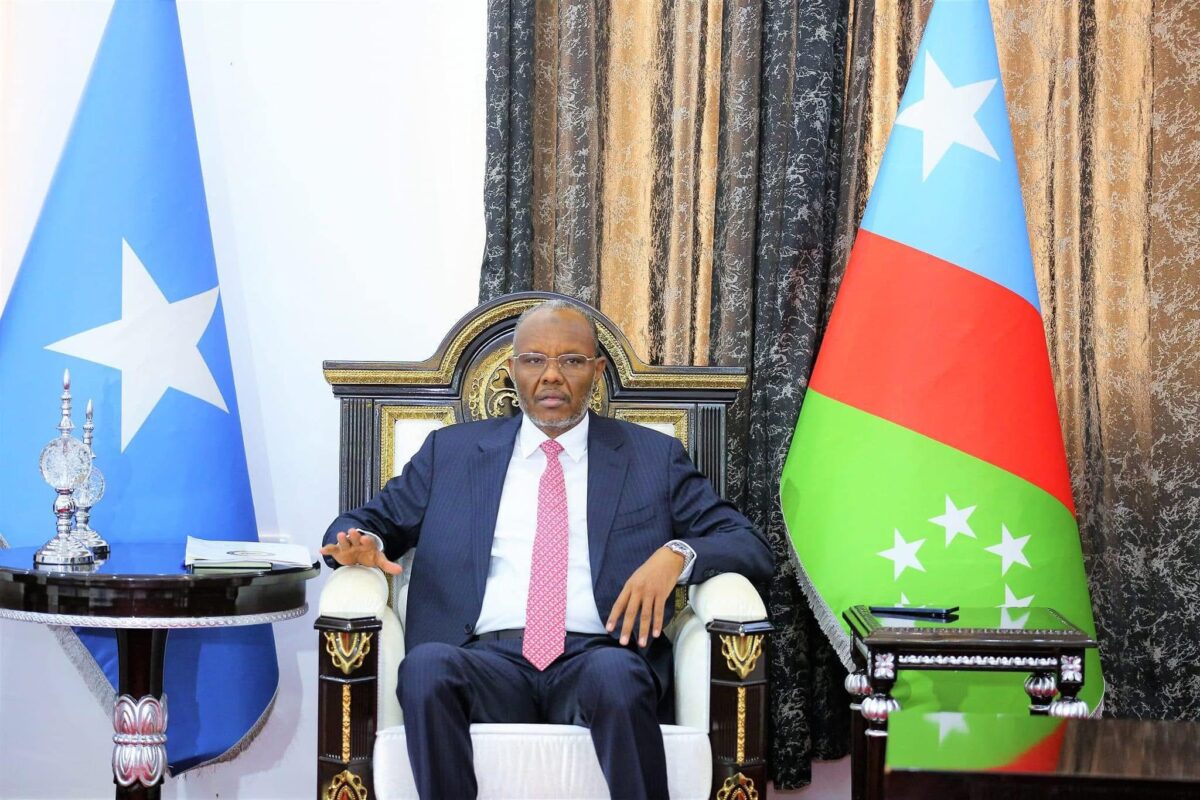
Abdiaziz Hassan Mohamed Laftagareen, the leader of South West State, announced he was stepping down from his senior role in the party, saying the current political direction had undermined cooperation between federal authorities and regional administrations.
Shortly after his resignation, he also declared that his state would suspend formal ties with the federal government, citing unresolved political and constitutional disputes.
The move came alongside the departure of three other influential party figures, deepening signs of division within the governing political establishment at a critical moment for the Horn of Africa nation.
The resignations follow the collapse of consensus talks earlier this month between the federal government and opposition leaders aimed at agreeing on an electoral roadmap and constitutional matters.
The discussions ended without agreement after sharp disagreements over constitutional amendments and the management of the upcoming elections.
Opposition groups accused the federal leadership of making unilateral decisions on key governance issues, while government officials maintained that reforms were necessary to move the country toward a more stable democratic system.
The political tensions come as President Hassan Sheikh Mohamud’s current term is set to expire on May 15 this year, raising fresh uncertainty over the electoral timeline.
With less than two months remaining, there is still no clear framework agreed upon by stakeholders on how and when the elections will be conducted.
Analysts warn that failure to reach a timely political settlement could trigger a constitutional vacuum and further destabilize an already fragile political environment.
Somalia traditionally elects its president through an indirect parliamentary system. Under this model, clan-delegated representatives choose members of parliament, who then elect the president.
The process has been used in successive transitions due to security challenges, logistical constraints, and limited voter registration infrastructure.
However, the federal government has recently insisted that the country should shift to a universal suffrage system, commonly described as “one person, one vote.”
Officials argue the change would mark a historic step toward full democracy after decades of conflict.
Many opposition leaders and several regional presidents have rejected the proposal, saying the timeframe remaining before the end of the current mandate makes such a transition unrealistic.
They argue that nationwide voter registration, security arrangements, legal frameworks, and electoral logistics can I not be completed in time.
Political fractures have also widened between Mogadishu and federal member states.
Leaders in Puntland and Jubaland had earlier announced they were suspending cooperation with the federal government, accusing it of centralizing power and bypassing inclusive political dialogue.
South West State joined that stance following Laftagareen’s resignation from the ruling party, further weakening coordination between the central government and regional administrations.
The mounting disagreements have stalled the work of national consultative forums intended to bring together federal and regional leaders to resolve governance disputes.
Observers say the lack of trust between stakeholders now threatens preparations for the election calendar and broader state-building efforts.
Despite the tensions, federal authorities have called for dialogue and urged political actors to resolve differences through constitutional channels.