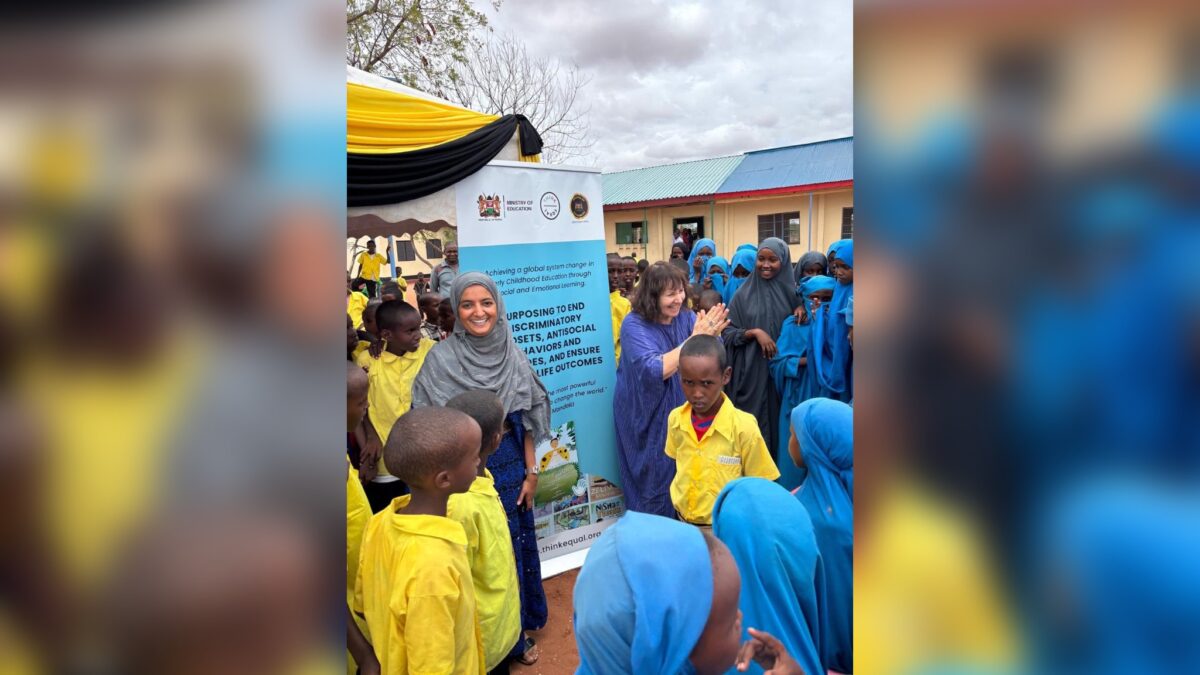
By Hassan Adan
MOGADISHU- The morning sun spills through the windows of a tidy classroom at Omar Alfaruuq Primary School in Adado, in Somalia’s Galmudug State. About 30 children sit quietly in a circle, their attention fixed on their teacher.
The room is calm, orderly, and attentive—a setting where learning unfolds not through rote repetition, but through reflection, storytelling, and shared experience.
In one classroom, Musdhaf Xaashi stands at the front, dressed in black trousers and a neatly tucked white shirt. He smiles gently as he narrates a story, his voice measured and calm.
The children lean forward, their bodies still, ears tuned to every word, as if trying to hold on to each moment of the tale.
In a nearby classroom, Sacdia Ahmed Mohamed leads her own group of pupils, seated in organized rows. She wears a full-length black jilbab that flows in clean, unadorned lines, moving softly as she walks between the desks.
Her presence is calm and steady, her voice gentle as she offers guidance and encouragement.
Some of the younger children reach out to her, calling her “Mummy”—a gesture that reflects a bond extending beyond the traditional role of a teacher.
In both rooms, the lessons go beyond reading and writing. Children are being taught to understand emotions, respect one another, and resolve conflict peacefully—part of a growing global push to integrate social and emotional learning into early education.
Across Somalia’s central Galmudug region, a quiet transformation is taking place—one that is reshaping what it means to learn in some of the country’s most fragile settings.
The initiative is led by Think Equal, an international non-profit organization founded in 2016 with a mission to ensure that “all humans are equal and equally valued” by embedding empathy, equality, and emotional intelligence into early childhood education systems.
Over the past year, the organization has rolled out its program across Galmudug, training hundreds of teachers and introducing a curriculum designed to foster empathy, respect, and peaceful conflict resolution among young learners.
In classrooms like those at Omar Alfaruuq Primary, educators say the changes are already visible.
“Before, children struggled to express themselves or even understand their emotions,” said Sacdia Ahmed Mohamed. “Now they are more open. They listen to each other, they share, and they are learning how to solve problems peacefully.”
Musdhaf Xaashi said the program has also reshaped teaching methods.
“We used to focus only on lessons from the textbook,” he said. “Now we are also teaching children how to respect one another, manage anger, and build friendships. These are skills they will carry for life.”
Mahad Mohamud, Think Equal’s Somalia program coordinator, said the initiative is designed to address a long-standing gap in education.
“The objective of this program is to equip trainers and teachers with the skills needed to support children’s social and emotional development, and we have achieved that through this training,” he said. “We believe this will directly improve learning outcomes and the well-being of children in our schools.”
The expansion is now accelerating.
Earlier this week, Think Equal signed a formal agreement with the Ministry of Education in Puntland State, Somalia, marking a significant step in scaling the program nationwide.
Puntland becomes the second Somali state to adopt the initiative, following its earlier rollout in Galmudug.
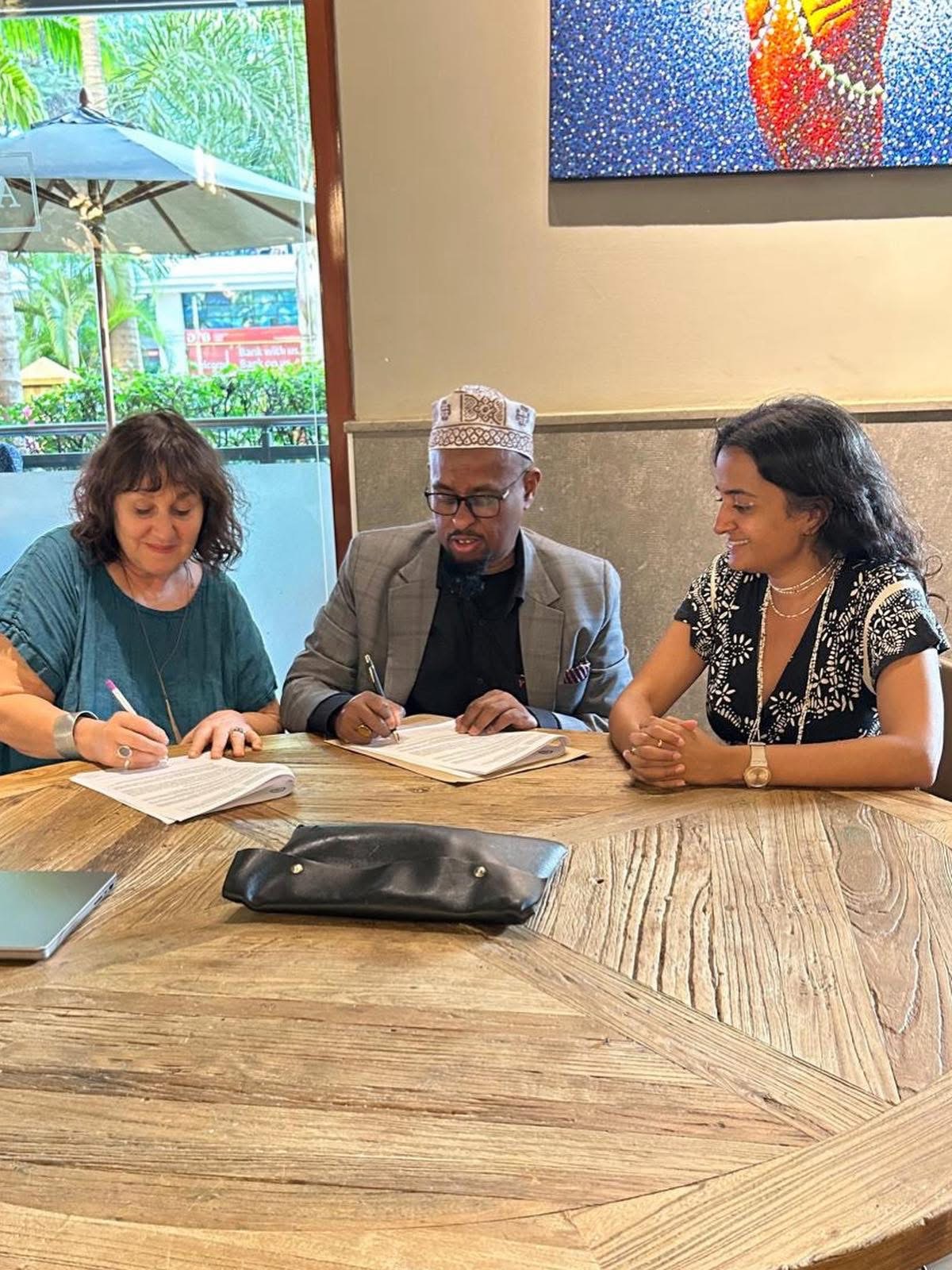
Director General, Ministry of education Puntland state Mohamed Ali Nour Puntland state, flanked by Leslee and Think Equal Global Programmes Director , Priyanka Devani during the signing of a formal agreement with the Puntland Ministry of Education and Higher Education, Somalia. Photo/Courtesy
A senior education official in Puntland described the partnership as a timely intervention.
“There has always been a gap in our curriculum when it comes to emotional and social development,” the official said. “This program helps address that gap from the earliest stages.”
Beyond Somalia, Think Equal is also extending its footprint into northeastern Kenya, including Mandera and Wajir counties—regions that share deep social, cultural, and economic ties with neighboring Somali communities.
In Mandera County, the organization has partnered with the Department of Education to introduce the program in Early Childhood Development and Education (ECDE) centers under the U.K.-funded INSPIRED program.
The rollout includes training for 84 field and technical officers, alongside tutors from Mandera and Tarbaj Teacher Training Colleges, who will mentor teachers and support classroom delivery.
Over the past year, the INSPIRED program has trained about 1,350 teachers, while providing teaching materials and distributing textbooks across Mandera and Wajir.
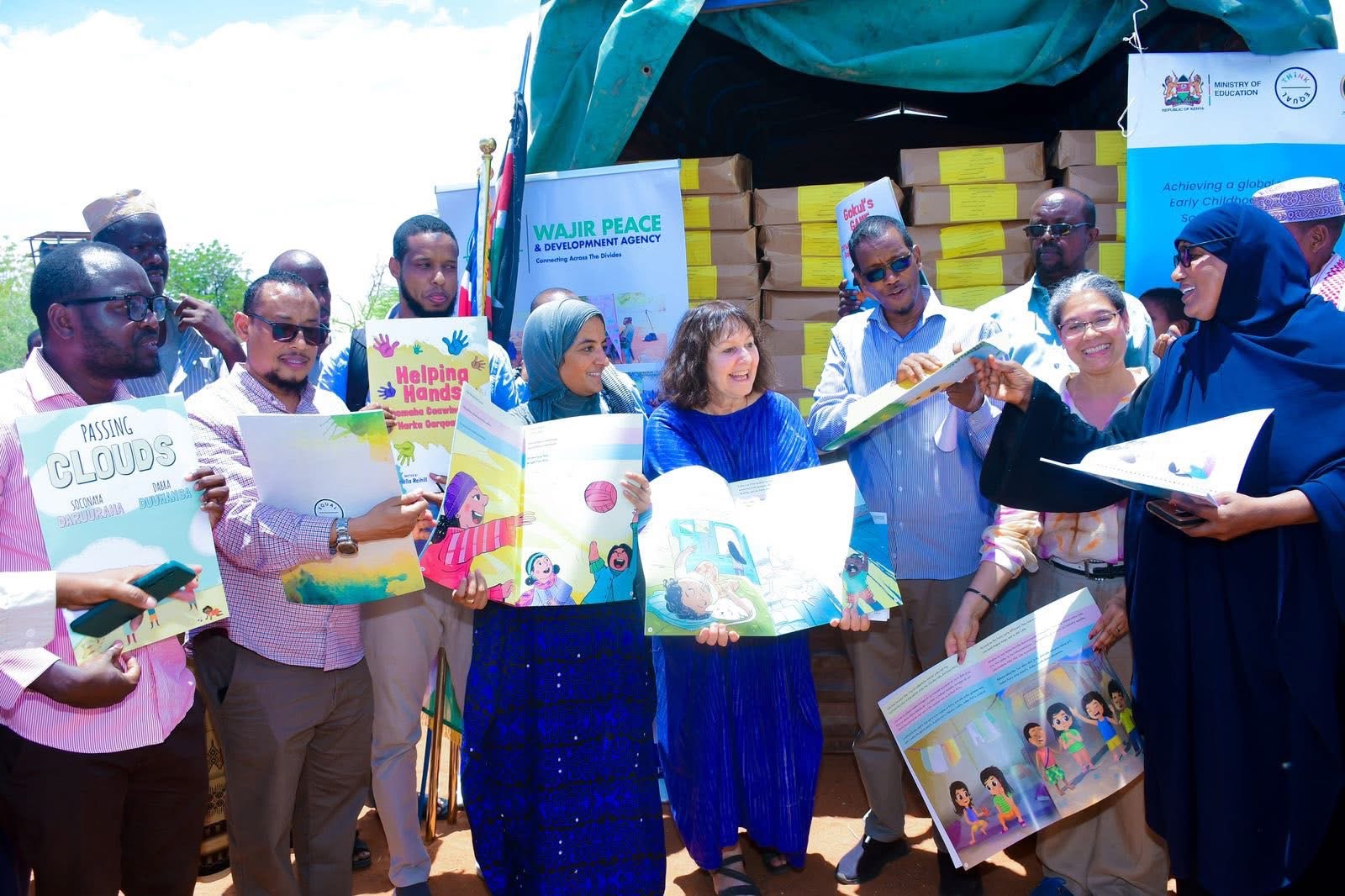
Handover of renovated classrooms and WASH facilities at Township and Furaha Primary Schools under the INSPIRED Programme, boosting safe and inclusive learning in Wajir County. Photo/Courtesy
At a high-level launch event, education officials outlined a phased implementation plan focused on embedding social-emotional competencies such as empathy, resilience, and self-awareness, alongside parental engagement and monitoring systems.
“We teach children to think equally about each other during their brain-building years through the critical missing subject of social and emotional learning,” said Priyanka Devani, Think Equal’s global director of programs.
“Education is about kindness, empathy, and the skills children need to thrive as responsible global citizens,” she added.
Local officials say the approach targets a critical stage of development.
“This is the window when the brain is developing rapidly,” said Roble Oyow Kosaar, Director of Research, Policy, and Partnerships in Mandera’s Department of Education.
“We want to embed social-emotional learning linked to mental health, well-being, and social competence so that children build strong foundations early in life.”
Globally, Think Equal has reached more than half a million children in over 30 countries, promoting skills such as empathy, inclusion, and critical thinking—competencies its founders argue are as fundamental as literacy and numeracy.
Education experts say such programs are particularly relevant in fragile and conflict-affected settings, where early experiences can shape long-term attitudes and behavior.
Back in Adado, as lessons come to a close, children file out into the schoolyard, some still discussing the day’s activities. Teachers say the changes may be gradual, but they are tangible—in how pupils communicate, interact, and respond to one another.
For Sacdia Ahmed Mohamed, the impact goes beyond the classroom.
“This is not just about teaching lessons,” she said. “It is about shaping a generation that understands respect, equality, and how to live peacefully with others.”
As Think Equal expands across Somalia and into neighboring Kenya, its work reflects a broader shift in global education—one that places empathy and human connection at the center of learning, even in the most challenging environments.