By Hassan Adan
Traders in Mandera town are counting mounting losses following a month-long intermittent power outage that has disrupted business operations, with no clear explanation from the Kenya Power and Lighting Company.
The outages have hit hardest businesses that rely on consistent electricity supply, particularly those dealing in perishable goods.
Vendors selling vegetables, fresh foods, and beverages say they are struggling to preserve stock, while demand for warm soft drinks has further reduced sales, as customers typically prefer them chilled in the region’s hot climate.
Butcheries, hotels, barber shops, and salons have also been significantly affected. Many of these establishments depend on electricity for refrigeration, food preparation, grooming equipment, and general operations.
Without stable power, business owners say they are unable to maintain normal service.
To stay operational, traders have increasingly turned to diesel-powered generators, a costly alternative that is eroding already thin profit margins.
Fuel prices in the area remain high, making generator use unsustainable for small and medium-sized enterprises.
“We are incurring huge losses due to the lack of power,” said Abdullahi Hussien, a hotel manager in Mandera. “We are forced to rely on generators, which are expensive to run. If the situation continues, many small businesses may be forced to shut down.”
Abdullahi added that limited generator use has made it difficult to preserve perishable goods. “We are unable to keep food, drinks, and meat fresh since generators cannot run continuously for 24 hours. Our hotel is losing business as food goes to waste,” he said.
Healthcare providers are also feeling the strain. Dr. Shaban Ali Ibrahim, who runs a private clinic in the town, said unreliable electricity is affecting service delivery, particularly for facilities that cannot afford alternative power sources.
“Private clinics and schools that provide daily essential services are forced to switch to costly generator power, which is unsustainable for small operators,” he said, adding that some facilities are left waiting for grid power to be restored.
Residents and traders have also expressed frustration with what they describe as a lack of concern from local leadership.
Several claim that many county officials and senior administrators have installed high-capacity solar systems in their homes and offices, allowing them to continue working and living comfortably despite the outages.
Ali Hussien, who spoke to Frontier Online Media, said the situation has created a growing sense of inequality.
“Our leaders in this county have no mercy for their people. Every day they sit in air-conditioned offices and enjoy cold drinks at home, while ordinary residents and traders struggle without power,” he said.
The claims echo broader concerns raised in regional media reports highlighting disparities in access to alternative energy solutions, with wealthier institutions and officials better able to cushion themselves from prolonged outages, while small businesses and low-income households bear the brunt of the crisis.
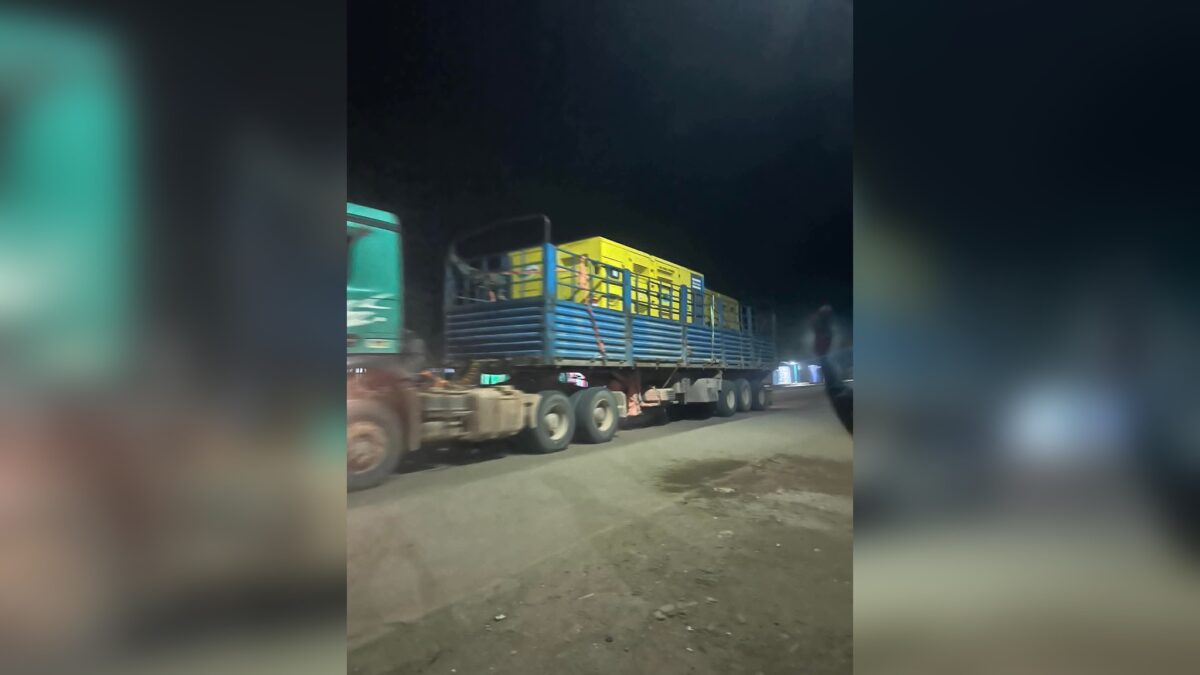
Confusion deepened on Sunday night after images circulated widely on social media appearing to show large power generators being loaded onto trucks in Mandera.
The images sparked speculation among residents, with some questioning whether the utility company was relocating equipment out of the area.
Attempts by Frontier Online Media to reach local offices of the state power utility for clarification were unsuccessful, as phone calls went unanswered.
Across Mandera, the constant hum of diesel generators has become a defining feature of daily life, underscoring the scale of the disruption.
Traders say the outages have not only increased operating costs but also reduced customer confidence and foot traffic.
The state power utility, which serves more than 10,000 customers in the town, has yet to provide a detailed explanation for the prolonged outages or a clear timeline for restoring reliable supply.
The lack of communication has further compounded frustration among business owners, many of whom say the uncertainty is making it difficult to plan or sustain their operations.
Most residents of Mandera are now being forced to cross into the neighboring Somali border town of Bulla Hawa in search of basic necessities such as cold drinks, ice, and other perishable goods that require constant refrigeration. The situation has sparked growing frustration and difficult questions among locals.
How is it that Bulla Hawa — a town in Somalia, a country still recovering from over three decades of civil war — enjoys a stable, round-the-clock power supply? Its streets remain lit throughout the night, businesses operate without interruption, and residents have access to reliable electricity despite limited government capacity
In stark contrast, Mandera, located in Kenya — a country that has enjoyed relative peace and stability since independence continues to struggle with persistent power outages.
Residents are left wondering why essential services, particularly electricity, remain unreliable despite the country’s stronger institutional framework and resources.