By Hassan Adan
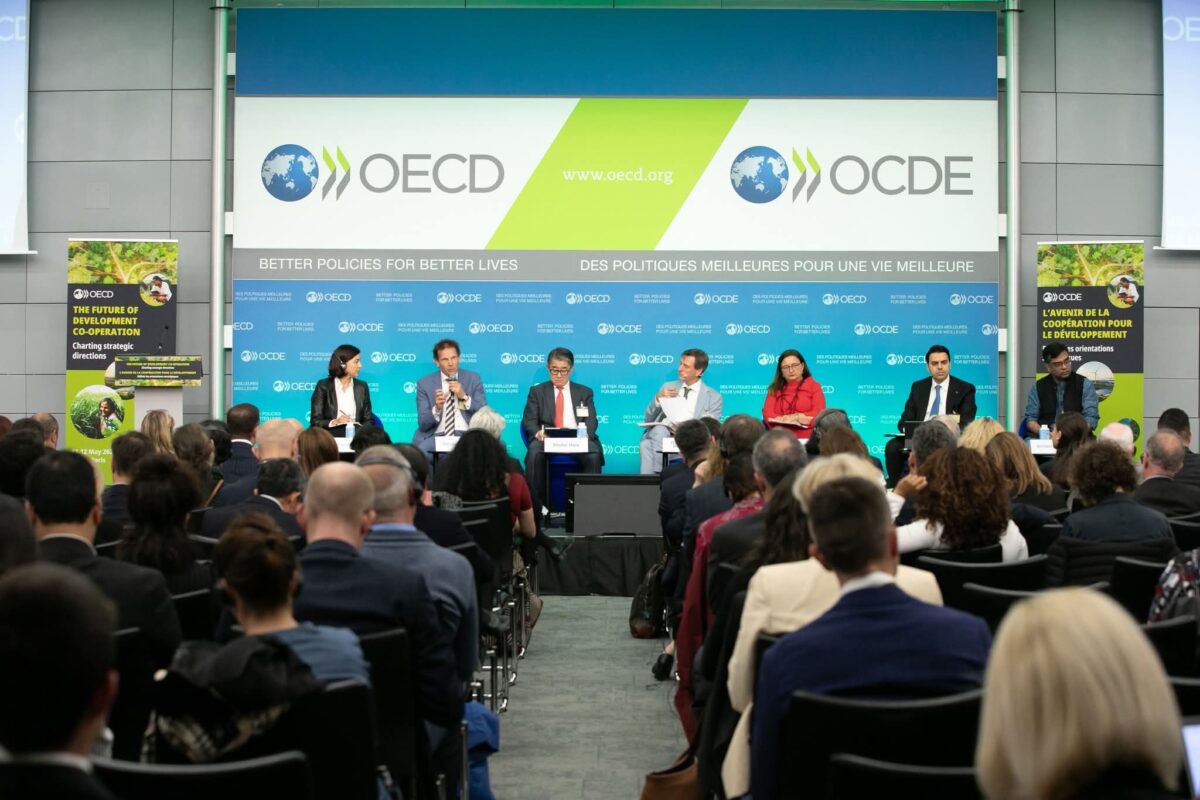
Global development leaders, ministers, economists and researchers gathered in Paris this week for a high-level conference hosted by the Organisation for Economic Co-operation and Development (OECD), warning that international aid systems face one of their most critical moments in decades as geopolitical tensions, shrinking budgets and climate pressures reshape global priorities.
The two-day conference, titled “The Future of Development Co-operation,” brought together policymakers, academics, civil society representatives and private sector leaders from around the world to examine how international development can remain effective amid growing global uncertainty, rising humanitarian needs and increasing demands for measurable impact.
Discussions focused on how development co-operation must evolve in response to geopolitical fragmentation, climate change, debt pressures, technological disruption and declining aid resources, with participants calling for stronger local institutions, greater accountability, more adaptive financing models and the responsible integration of artificial intelligence into development systems.
Mohamed Okash, director of the Institute of Climate and Environment (ICE Institute) at SIMAD University, joined the discussions as Somalia’s academic and policy voices increasingly seek a place in shaping international development priorities.
Mr Okash said the conference reflected a growing realization among global institutions that producing research and data alone is no longer enough if development efforts are to deliver lasting impact.
“Development institutions are generating more data and analysis than ever before, but many systems still struggle to translate evidence into effective action, institutional learning and long-term impact,” Mohamed Okash said.
He said discussions emphasized the need for stronger local institutional capabilities, locally led development, improved accountability systems, collective AI integration and financing mechanisms that can respond more effectively to changing global realities.
“The future of development co-operation will increasingly depend on collaboration, country ownership, interoperable systems, and investments in both human and institutional capacities,” Mohamed Okash said.
He added that institutions from fragile and climate-vulnerable countries such as Somalia must play a greater role in designing global solutions rather than simply implementing externally designed programs.
SIMAD University said its participation in the high-level global conference reflects its growing contribution to international discussions on climate adaptation, systems transformation and locally led development, bringing perspectives from Somalia and other fragile contexts to the global policy arena.
The conference concluded with renewed calls for governments, multilateral institutions and research organizations to move beyond policy dialogue and focus on implementation, as global inequalities, climate risks and economic uncertainty continue to test the future of international development.