By Hassan Adan
Somalia is moving to unify its fragmented digital payments ecosystem after the Central Bank announced plans to expand the Somalia Instant Payment System (SIPS) to connect commercial banks, mobile money operators and regional payment networks through a single interoperable platform.
The move is expected to transform how millions of Somalis transfer money by enabling seamless transactions between banks, mobile wallets and other financial service providers.
Somalia Central Bank Governor Abdirahman Mohamed Abdullahi said the initiative forms part of the country’s broader strategy to modernise its financial infrastructure and accelerate the growth of a digital economy.
“Somalia’s payment systems ran separately from one another for years, with banks and mobile money operators working on closed networks that could not transfer value between them, which raised costs and left many people outside the formal financial system,” Abdullahi said.
For years, Somalia’s financial sector has relied heavily on separate payment systems, forcing customers to transact only within the same bank or mobile money provider.
The lack of interoperability increased transaction costs and limited access to formal financial services despite the widespread use of mobile money across the country.
The Central Bank began addressing the challenge in 2021 by connecting commercial banks through the National Payment System, allowing real-time gross settlement and automated clearing of high-value interbank transactions. However, officials said the system was not designed to support round-the-clock retail payments used in daily transactions.
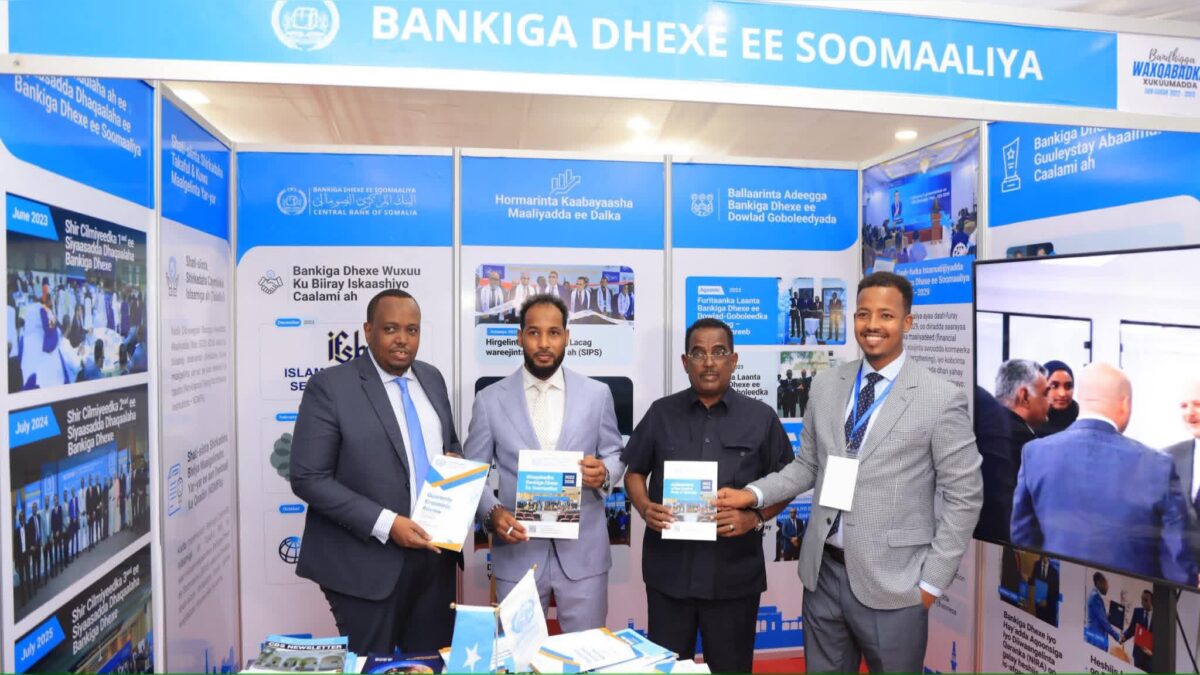
To bridge that gap, the Central Bank launched the Somalia Instant Payment System (SIPS)
in January 2025. Built on the internationally recognised ISO 20022 messaging standard, the platform enables instant, secure and interoperable payments among participating financial institutions.
Once fully operational, SIPS will connect 14 commercial banks and eight mobile money and e-wallet providers on a single network.
The platform will support person-to-person transfers, merchant payments, government collections and government disbursements to citizens, while additional services—including business-to-business, business-to-government and business-to-person payments—are currently under development.
Officials said SIPS will also integrate with SOMQR, Somalia’s national standardised QR code system, allowing merchants—including thousands of small informal businesses—to accept digital payments more easily.
The Somalia Payment Switch, which operates SIPS, was established through a partnership between the Central Bank and 13 commercial banks.
According to Governor Abdullahi, integrating mobile money operators remains the next major milestone, given that mobile wallets are the primary means of payment for most Somalis.
“Once connected, the real scale of this system will become visible, making every Somali with a mobile wallet part of the same interoperable network and turning SIPS into a powerful engine of financial inclusion,” he said.
The governor also said Somalia intends to integrate its payment infrastructure with regional and continental payment systems.
“As the newest member of the East African Community, we intend to contribute to modern regional payment infrastructure,” he said.
“We are also working to connect SIPS to the Pan-African Payment and Settlement System before the end of 2026.”
He described efficient payment systems as an economic, social and strategic priority, particularly in a country where remittances remain a vital source of household income and economic activity.
Somalia Finance Minister Bihi Egeh welcomed the progress, praising the Central Bank’s leadership in driving financial sector reforms.
“The establishment of Somalia Instant Payment System is a strategic investment in the financial architecture of our nation, enhancing efficiency, strengthening transparency, promoting financial inclusion and supporting a more integrated and competitive economy,” Egeh wrote on X.
He said ongoing reforms in the financial sector, economic governance, the business environment and investment climate are creating the institutional foundations needed to achieve sustainable economic growth, resilience and shared prosperity.
Minister Egeh added that sustained reforms remain the surest path to unlocking Somalia’s economic potential.
The latest initiative comes as Somalia continues to rebuild its financial sector following decades of conflict that left the country without a fully integrated banking system.
In recent years, the Central Bank has implemented a series of reforms aimed at strengthening financial regulation, improving banking supervision and expanding digital financial services.
The reforms have gained momentum after Somalia secured debt relief under the Heavily Indebted Poor Countries (HIPC) Initiative and joined the East African Community (EAC) in 2024, both of which have intensified efforts to align the country’s financial systems with regional and international standards.