NAIROBI- Garissa County has reaffirmed its leadership in refugee policy reform following the validation of Kenya’s newly developed National Refugee Management Curriculum, a landmark initiative aimed at professionalising refugee governance across the country.
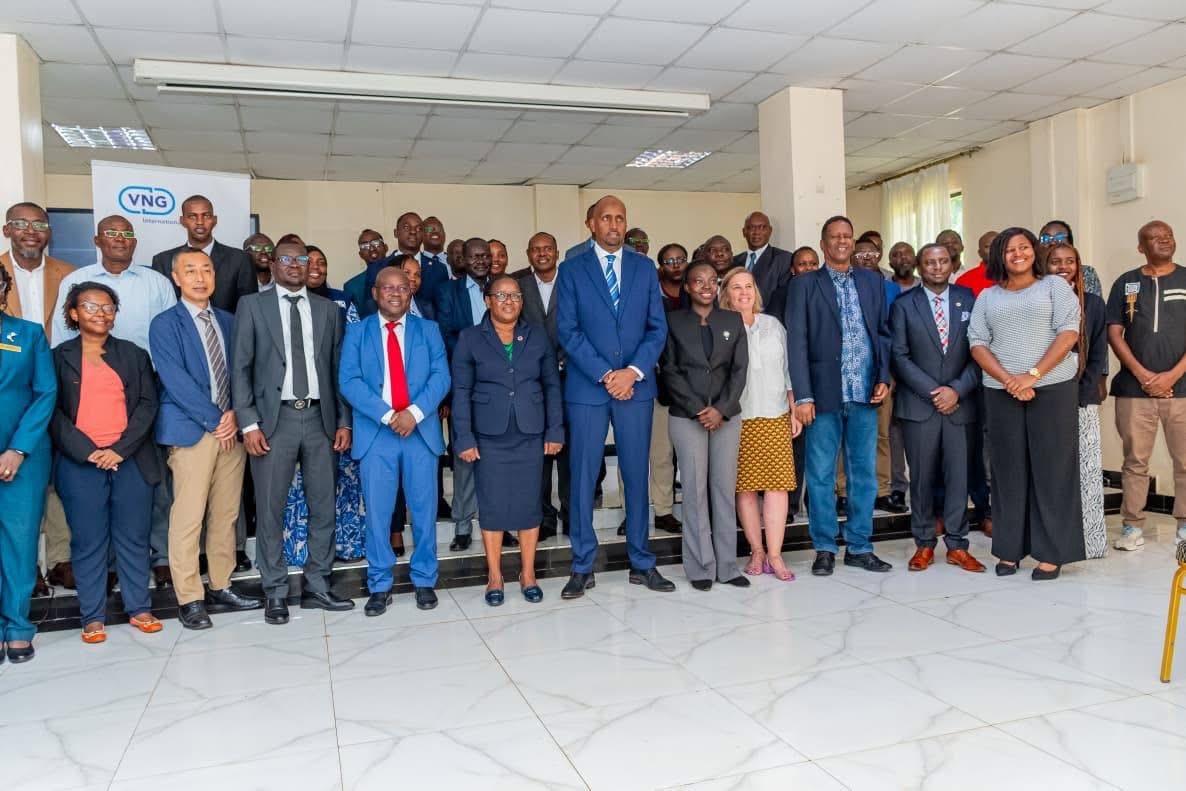
The closing session of the high-level validation and stakeholders’ engagement forum was presided over by the Speaker of the Garissa County Assembly, Hon. Abdi Idle Gure, at the Kenya School of Government (KSG) in Nairobi.
The forum brought together national and county government officials, development partners, and policy experts to review and endorse the curriculum.
The validation workshop was organised by VNG International in partnership with KSG and The Hague Academy for Local Governance.
KSG played a central role in developing the curriculum by providing the institutional framework and technical expertise needed to integrate the programme into Kenya’s public service training system.
In his remarks, Hon. Gure praised the collective efforts of stakeholders involved in finalising the curriculum, describing it as a milestone in strengthening refugee management in Kenya.
He noted that the programme is aligned with the Shirika Plan, the government’s flagship policy that promotes the integration of refugees into host communities.
“The curriculum will equip national and county officials, security agencies, and other actors with the skills required to manage refugee affairs effectively, ethically, and in line with national and international standards,” Hon. Gure said.
While acknowledging that refugee affairs remain a national government mandate, the Speaker emphasised the critical role of host counties, particularly Garissa and Turkana, which have accommodated refugee populations for more than three decades.
He called for enhanced resource allocation and greater devolution of resources to enable counties to effectively support refugee management at the local level.
Hon. Gure further underscored the importance of sustained sensitisation of refugees, host communities, and stakeholders on the paradigm shift introduced by the Shirika Plan.
He noted that the transition from long-term encampment to integrated settlements is key to promoting self-reliance, social cohesion, and peaceful coexistence.
The Speaker observed that the validation forum builds on Garissa County’s recent international engagements, including a high-level benchmarking visit to The Hague in May 2025 led by Governor Nathif Jama and himself, where the county explored global best practices in local governance and refugee management.
Garissa County Secretary Mohamed Mursal commended KSG, VNG International, and all partners for their commitment to strengthening public service capacity in refugee affairs.
He reaffirmed the county government’s full support and continued collaboration with the national government and development partners to ensure successful implementation of the curriculum.
He noted that the curriculum will enable counties to mainstream refugee and host community priorities into County Integrated Development Plans (CIDPs), Annual Development Plans (ADPs), sector strategies, and budgets—an approach he described as critical to achieving inclusive and sustainable development.
The forum was attended by senior county and national officials, including Turkana County Deputy Governor Dr. John Erus and Adjunct Research Professor Margaret Kobia, alongside other distinguished guests.