By Hassan Adan
Somalia is seeking a stronger role in East Africa’s emerging artificial intelligence landscape, with SIMAD University’s AI Institute participating in a regional initiative to harmonise AI education, strengthen research collaboration and prepare university graduates for the future of work.
The university was represented by Ms. Ifrah Hussein, the designated focal person for Somalia’s AI node within the East African Community (EAC) Regional AI Network, at the AI Foundational Module Validation Workshop and Regional AI Network Convening held in Dar es Salaam, Tanzania.
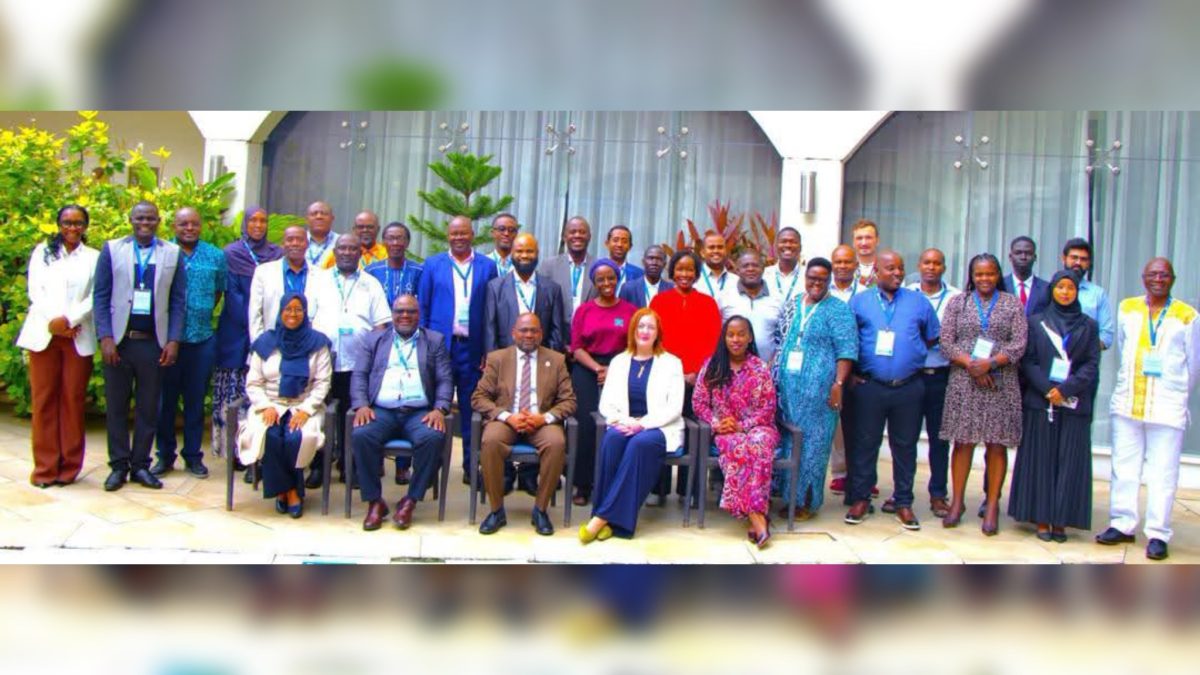
The meeting brought together university representatives, AI experts, government and regulatory institutions, and development partners to review a proposed regional framework for introducing artificial intelligence knowledge and responsible technology use into higher education.
Organized by the Inter-University Council for East Africa (IUCEA), the East African Science and Technology Commission (EASTECO) and regional partners, with support from German development cooperation, the two-day validation workshop took place on October 6–7, 2026.
The discussions focused on a draft EAC AI Foundational Module designed to equip university students across academic disciplines with essential AI knowledge, practical skills and the ability to evaluate and use AI technologies responsibly.
Somalia’s participation offers a platform to shape regional AI education priorities and prepare university graduates for an economy increasingly driven by automation and digital innovation.
During the regional network convening, Ifrah Hussein contributed to discussions on institutional AI capacity, cross-border research partnerships, faculty development and collaboration between universities and industry.
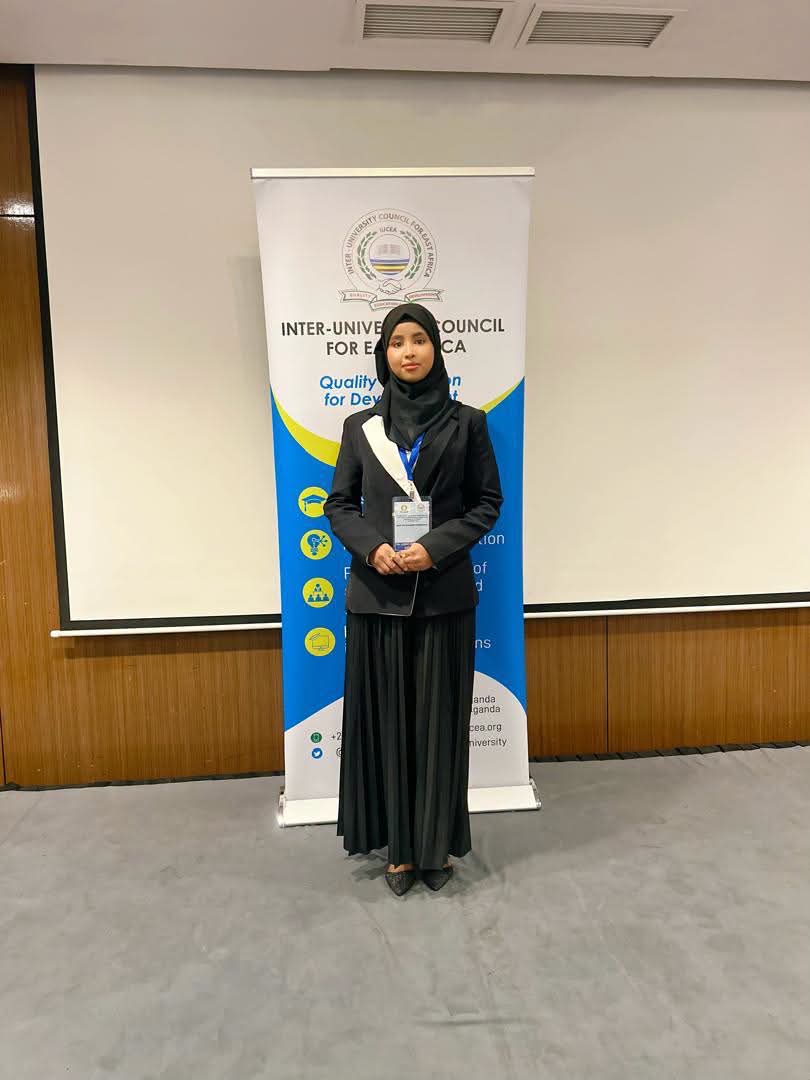
Ifrah Hussein, SIMAD AI Institute’s designated focal person for Somalia’s AI node within the East African Community (EAC) Regional AI Network, poses in front of the Inter-University Council for East Africa (IUCEA) banner during the EAC AI Foundational Module Validation Workshop and Regional AI Network Convening in Dar es Salaam, Tanzania, held on October 6–7, 2026.
The engagement places SIMAD AI Institute within a growing regional network seeking to connect higher education institutions, pool expertise and develop research and training opportunities that extend beyond national borders.
“Artificial intelligence presents an important opportunity for Somalia’s universities to strengthen research, improve teaching and prepare graduates for emerging opportunities in the digital economy.” Ifrah told reporters
” Through regional collaboration, we can share expertise, develop local talent and contribute to AI solutions that respond to the needs of our communities.” She added
SIMAD AI institute’s participation comes as East African governments and universities increasingly recognise that the region’s ability to benefit from artificial intelligence will depend on its capacity to educate skilled graduates, develop research institutions and build locally relevant technological solutions.
Somalia faces the challenge of expanding digital skills training, strengthening university research and equipping young people to compete in the global technology sector
The Dar es Salaam meeting follows a series of regional initiatives aimed at moving East Africa from fragmented AI activities towards a coordinated approach to education, research and innovation.
In March 2026, the EAC formally launched the EAC AI Alliance and its Regional Network on Artificial Intelligence in Education and Research at the Fourth EAC Regional Science, Technology and Innovation Conference in Kigali, Rwanda.
The initiative was designed to connect universities across the regional bloc through national institutional nodes, creating opportunities for joint research, curriculum development, knowledge exchange and responsible AI deployment.
The network’s ambitions extend beyond education to include the development of an East African Centre of Excellence in Artificial Intelligence.
The initiative builds on earlier regional efforts to bridge the gap between university education and the technology industry’s evolving skills demands.
Through programmes such as the AI4EAC Innovation Challenge, supported by partners including Zindi, the Inter-University Council for East Africa (IUCEA), the East African Science and Technology Commission (EASTECO), GIZ, UNESCO Campus Africa and the Japan International Cooperation Agency, universities have been encouraged to develop AI-driven solutions to real-world challenges while strengthening students’ practical skills and links with industry.
According to the EAC, the inaugural challenge in 2025 engaged 3,891 participants from 57 universities across eight countries: Burundi, the Democratic Republic of the Congo, Kenya, Rwanda, Somalia, South Sudan, Tanzania and Uganda.
Participants developed AI applications addressing challenges in healthcare, agriculture, finance and education, demonstrating how university-led innovation can be directed towards practical development needs.
The experience provides a foundation for the regional network’s wider ambition to strengthen AI skills and research while encouraging institutions to develop solutions relevant to East African communities.
In April 2026, the EAC adopted a declaration on artificial intelligence that included commitments to promote responsible AI policies, expand regional research and innovation, and establish a Regional AI Technologies Fund.
The declaration also emphasised African AI sovereignty, including the development of technologies that reflect regional languages, use locally relevant data and operate on infrastructure governed by African institutions.
Universities worldwide are reassessing their curricula as generative AI and automation reshape employment, research and professional practice.
Institutions face the challenge of preparing students to use AI tools effectively while understanding their limitations, identifying inaccurate information, protecting personal data and making responsible decisions.
As the EAC advances its regional AI agenda, SIMAD University’s participation signals Somalia’s engagement in discussions that could help shape the future of higher education, research and technological development across the region.