By Hassan Adan
Tens of thousands of voters across Somalia’s South West State turned up at polling stations on Sunday to elect regional lawmakers and district councillors in a landmark vote that authorities say signals a decisive break from the country’s decades-old indirect electoral model, even as key opposition groups rejected the process and accused the federal government of pushing ahead without national consensus.
The vote, taking place simultaneously across 13 districts in Bay, Bakool and Lower Shabelle regions, is one of the largest direct electoral exercises ever conducted by a federal member state in Somalia and forms part of the government’s broader push toward a one-person, one-vote system after years of clan-based power-sharing arrangements.
Election officials said 376,212 voters had been registered for the polls, including 164,716 men and 211,496 women, reflecting strong female participation in the process.
Officials also said 4,781 registered voters were persons living with disabilities or other special needs.
Speaking after officially launching the polls in Baidoa, South West, The Indipendent Electoral commission chairman Abdikariin Ahmed Hassan described the vote as a defining democratic milestone for both the region and Somalia as a whole.
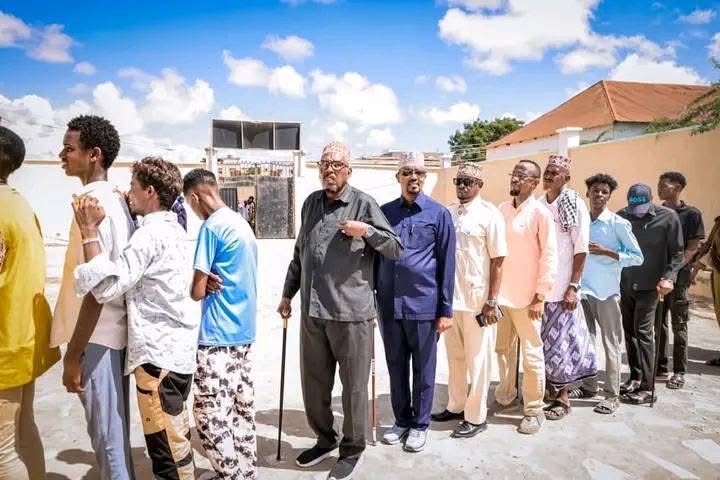
He said the Polling stations opened early under tight security, with voters forming queues in urban centres and rural districts alike as election workers oversaw the distribution of ballots and verification of registered voters.
“Security personnel were deployed around key polling centres amid concerns over possible disruptions” The chair Told Reporters
The elections are expected to fill seats in the South West regional House of Representatives as well as district councils across the 13 constituencies.
A total of 394 candidates drawn from 15 registered political organizations are competing for parliamentary seats, according to election officials.
Of those candidates, 322 are men while 72 are women.
For local district council positions, 1,297 candidates from 18 political organizations are contesting seats, including 1,022 men and 275 women, highlighting growing political participation at the grassroots level despite Somalia’s fragile security environment.
Election officials said the synchronized vote was designed to strengthen democratic institutions at the regional and local levels by shifting power directly to voters, replacing a system in which legislators and local representatives were often selected through negotiations involving clan elders, political intermediaries and regional power brokers.
Despite the historic significance of the vote, the process has been overshadowed by sharp criticism from opposition groups.
The Somali Future Council, one of the country’s main opposition alliances, announced a boycott, accusing the federal leadership of managing what it called a politically controlled process whose outcome had already been determined.
Opposition figures argued that major electoral and constitutional reforms should only proceed through broader political dialogue involving federal member states, civil society and rival political actors.
Election authorities in both Mogadishu and Baidoa have dismissed those accusations and insist the process is lawful, transparent and part of Somalia’s long-delayed democratic transition.
Sunday’s regional vote comes amid growing political tensions across Somalia over electoral reforms, constitutional amendments and the expanding role of political parties in a country historically governed through clan-based agreements.
The dispute has widened divisions between President Hassan Sheikh Mohamud and opposition leaders, who accuse his administration of pushing through major political changes without sufficient national consensus.
In Mogadishu, the political standoff was visible on the streets as government forces deployed heavily armed troops, police units and military vehicles across major roads, strategic junctions and key government installations after opposition leaders announced plans for mass demonstrations against what they described as illegal demolitions of homes, forced evictions, and the displacement of vulnerable families from parts of the capital.
Witnesses said several roads leading to central parts of the capital were temporarily sealed off, while security personnel mounted checkpoints and intensified patrols in what officials described as measures to preserve public order.