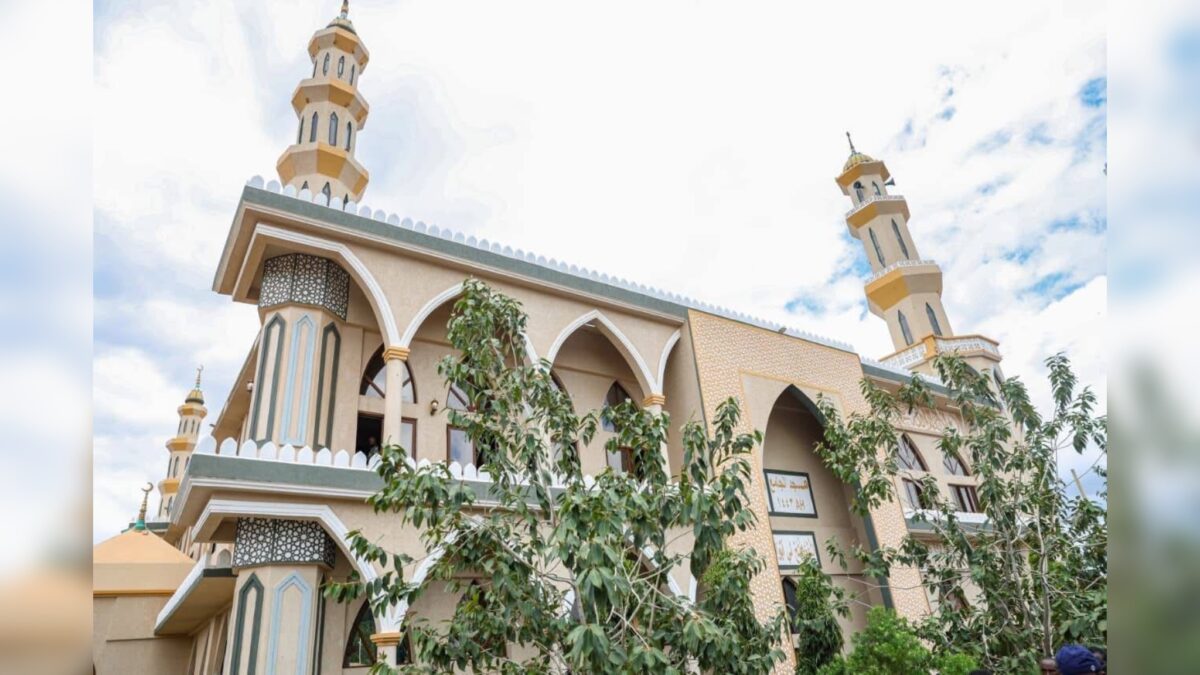
For centuries, mosques in Islamic civilization have been built to serve as houses of God — places where the call to prayer is raised, Quranic verses are recited, and people gather in tranquility rather than around electoral calculations. Yet time, it seems, always finds ways to “upgrade the accompanying services,” until the opening of some mosques begins to resemble a traveling political exhibition: a mixture of speeches, media performances, displays of influence, and complimentary promises postponed until the next election season.
The Takaba Grand Mosque, which was primarily built through contributions from local residents, charitable individuals, and businesspeople, was expected to be inaugurated with the simplicity befitting the sanctity of a house of worship — attended by scholars and members of the community who carried cement bags, contributed from their modest daily earnings, and laid the mosque’s foundation brick by brick.
But simplicity, apparently, no longer suits the era of early political campaigns. After all, how could anyone waste a golden opportunity where four thousand people gather in one place without turning it into an open rehearsal for the 2027 elections?
Suddenly, the town of Takaba was filled with individuals harboring political ambitions, preparing for future parliamentary bids, or simply fearing that their names might disappear from the public scene.
Current MPs arrived, former MPs appeared, potential candidates emerged, and political figures seeking “popular rebranding” all gathered — making the scene look less like the opening of a mosque and more like preparations for the inauguration of a new parliament.
Meanwhile, ordinary citizens came with sincere joy, celebrating the opening of a mosque they had helped build with their modest resources, only to find themselves in the middle of a speech-filled political festival recycling old campaign rhetoric in an upgraded format:
- “Development is coming…”
- “Projects are on the way…”
- “The future is bright…”
Citizens were simply asked to remain patient for another five years — two terms, naturally renewable.
Luxury Diplomacy and Political Theater
Among the most astonishing scenes was the unmistakable “luxury diplomatic touch” surrounding the event. Nearly four aircraft landed at Takaba Airport, as if the town were hosting an emergency regional summit or a United Nations Security Council meeting rather than a local religious occasion.
On board were between 150 and 200 guests, accompanied by cameras, ceremonial delegations, and elaborate hospitality arrangements. The spectacle led some residents to innocently wonder:
“Was the mosque actually inaugurated… or was the new Takaba International Airport officially launched?”
Yet the most troubling question remains the one that quietly enters the mind and stubbornly refuses to leave:
Couldn’t this enormous budget have been enough to establish a permanent endowment for the mosque?
Or a Quranic school?
Or a support project for widows and orphans?
Or even service facilities for worshippers instead of luxurious reserved seating for dignitaries?
Scholars, Protocol, and Tribal Undercurrents
Some scholars and preachers attended and fulfilled their role admirably, reminding people of the sanctity and true mission of mosques. They deserve appreciation for their guidance and sincerity.
Others, however, appeared to participate in what resembled a “mobile protocol season,” where the main objective seemed to be taking photographs beside the right politician before quickly returning to social media to describe the event as a “historic breakthrough” or an “exceptional achievement.”
Thus, perhaps for the first time, a new category of scholars emerged: digital protocol scholars — experts in visibility more than influence, and in cameras more than pulpits.
Behind the scenes, disagreements among scholars over the administration of the new mosque revived familiar tribal tensions. Memories of previous disputes, including the well-known Alwaq Mosque controversy, remain fresh.
Religious schools managed by scholars from particular clans have, in some cases, fostered the perception that these institutions are inherited possessions that should not be challenged.
This reflects a deeper and more dangerous issue: the entrenchment of tribalism within religious discourse itself.
Conclusion
In the end, no one opposes the construction of mosques or contributing to the maintenance of the houses of God. Such acts remain among the noblest and most rewarding deeds.
But transforming the opening of a mosque into a lavish electoral carnival raises a question that cannot be ignored:
Did people truly gather to inaugurate a house of worship… or to launch an early election campaign beneath the shadow of the minaret?
Only the coming days will reveal whether Takaba Grand Mosque will remain a beacon of knowledge and worship — or merely become an elegant backdrop for future campaign photographs, where slogans are raised more often than hands in prayer.
Written by:
Dr. Abdulsalam Adam Mohamed
Director, Maarifa College – Nairobi (South C)
Writer and Researcher in Social and Educational Affairs