By Hassan Adan
Universities and education stakeholders from across East Africa are stepping up efforts to integrate artificial intelligence into teaching, research and higher education while developing safeguards to address ethical and governance concerns.
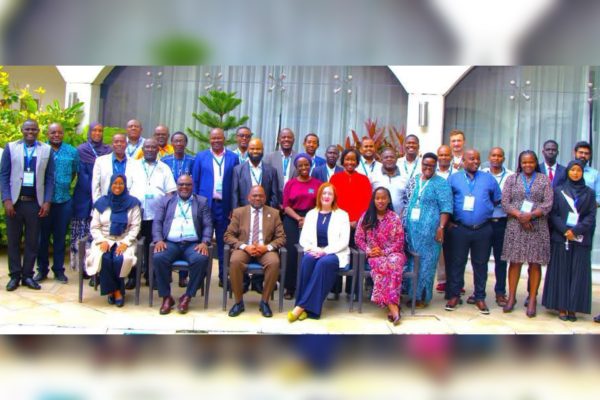
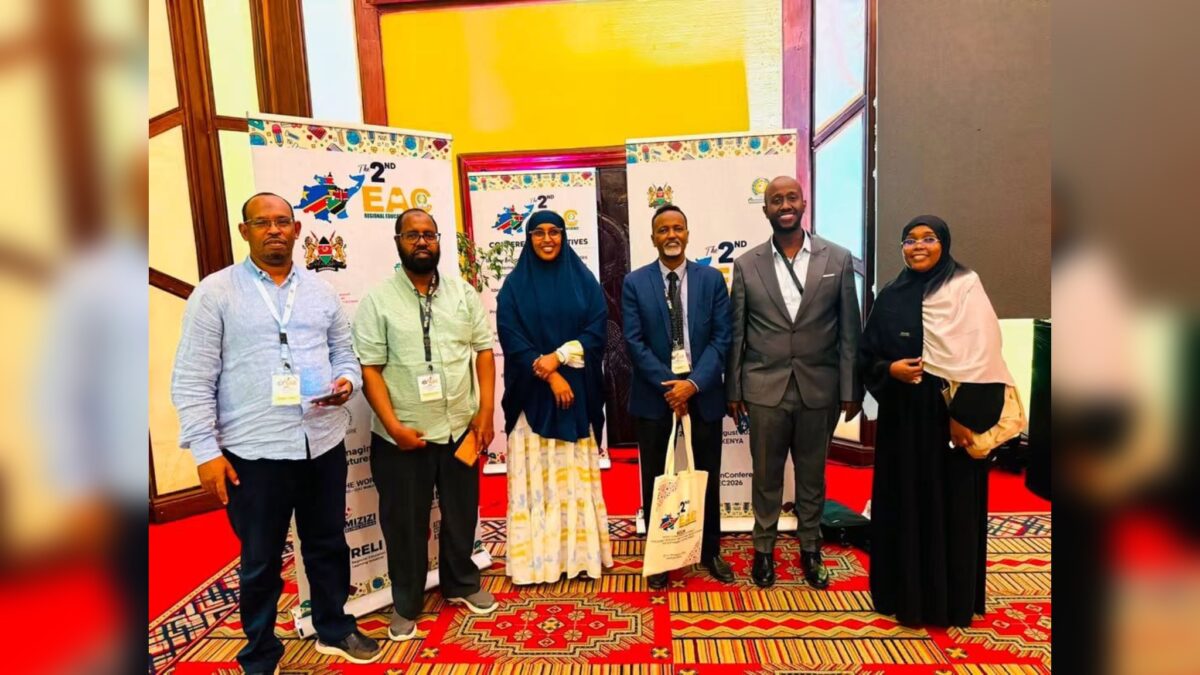
The discussions were held at an Artificial Intelligence in Education Pre-Conference Workshop in Nairobi on Aug. 25, bringing together regional and international stakeholders to exchange experiences on the use of AI in education and examine how institutions can prepare teachers and students for an increasingly
AI-driven economy.
The workshop included contributions from the Inter-University Council for East Africa, UNESCO and the German development agency GIZ. Participants emphasized the need for practical approaches that allow education institutions to benefit from AI while addressing concerns over its responsible use
SIMAD University was represented at the workshop by Nasra Ahmed of the SIMAD AI Institute, who participated in discussions on responsible AI, governance, AI-enabled teaching and learning, teacher training and the changing role of artificial intelligence in higher education.
“AI is already changing the way education is delivered, and universities need to prepare educators and students to use these technologies responsibly,” Nasra Ahmed said.
“For East Africa, regional cooperation is important so that institutions can share experiences, strengthen AI capacity and develop approaches that protect academic integrity while making use of the opportunities AI provides.”She added
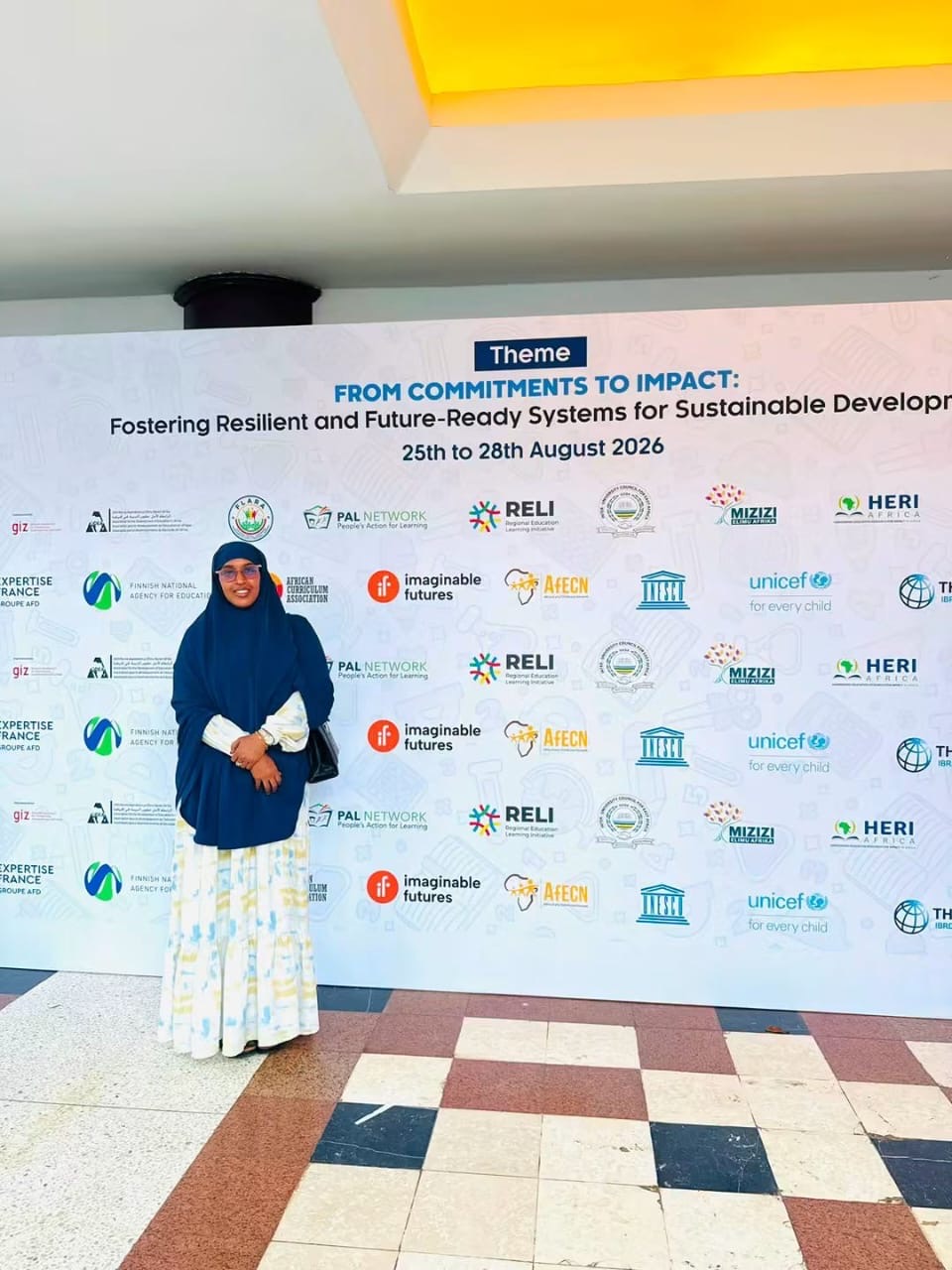
Nasra Ahmed of the SIMAD AI Institute poses for a photo during the AI in Education Pre-Conference Workshop in Nairobi, Kenya.
The workshop brought together contributions from the Inter-University Council for East Africa (IUCEA), UNESCO and Germany’s development agency GIZ.
Discussions focused on how universities can adopt AI while addressing issues including governance, responsible use, academic integrity and the capacity of teachers and educators.
The meeting took place within the framework of the EAC AI Alliance, a regional initiative aimed at strengthening artificial intelligence education, research and innovation.
The alliance was formally launched in March, when the East African Community invited universities to become part of a regional network designed to build AI capacity across member states.
The regional push has gathered pace in recent months. In July, IUCEA and its partners launched a Regional AI Network of Universities in Nairobi, describing it as a platform for universities to collaborate on AI education, research and innovation.
IUCEA and GIZ are also working on a harmonized AI foundational module intended to give university students across the East African Community a common understanding of AI concepts, applications, limitations, ethical considerations and responsible use, regardless of their field of study.
The EAC has made AI skills and education a broader regional priority.
In April, the bloc said its member states had agreed to work toward harmonizing AI-related curricula, developing regional certification and accreditation frameworks and strengthening technical and vocational education to prepare workers for an AI-driven economy.
UNESCO has also warned that the rapid adoption of AI in education needs to be matched by stronger institutional safeguards.
The agency said only about 10% of schools and universities worldwide had established frameworks for responsible AI use, according to a 2023 survey it cited in its regional work on AI and education.
UNESCO has promoted guidance covering generative AI, ethics and AI competencies for teachers and students.
For East Africa, the challenge is not only how to introduce AI into classrooms but also how to ensure that institutions have the skills, infrastructure and policies needed to use it effectively.
GIZ has identified the lack of harmonized standards and policies for emerging technologies such as AI as a constraint on regional integration and innovation.
Its regional programme with IUCEA and other partners focuses on practice-oriented education, AI and digital skills, research cooperation and support for policymakers.
The region is also seeking to develop AI solutions that reflect local priorities.
Nearly 1,000 students from 57 universities in eight East African countries, including Somalia, participated in the AI4EAC Innovation Challenge earlier this year, developing applications addressing challenges in areas such as education, health, agriculture and employment.
The growing regional focus reflects a wider debate over how universities should respond to technologies capable of generating text, code, images and other forms of academic work.
For institutions such as SIMAD University, participation in regional discussions offers an opportunity to contribute to that debate while following developments in AI education, governance and research across East Africa.
The Nairobi workshop underscored a growing consensus that universities cannot treat AI as a purely technological issue.
Its adoption is increasingly linked to curriculum development, teacher training, academic standards, research capacity and the preparation of graduates for changing workplaces.
The growing availability of AI tools has created new possibilities for personalized learning, academic research and administrative work, while also raising concerns about unequal access to technology, misuse of AI, academic cheating and the need for educators to develop new skills.
Participants said cooperation among governments, universities, international organizations and other education stakeholders will be important as East African countries seek to develop education systems that can adapt to rapid advances in artificial intelligence.