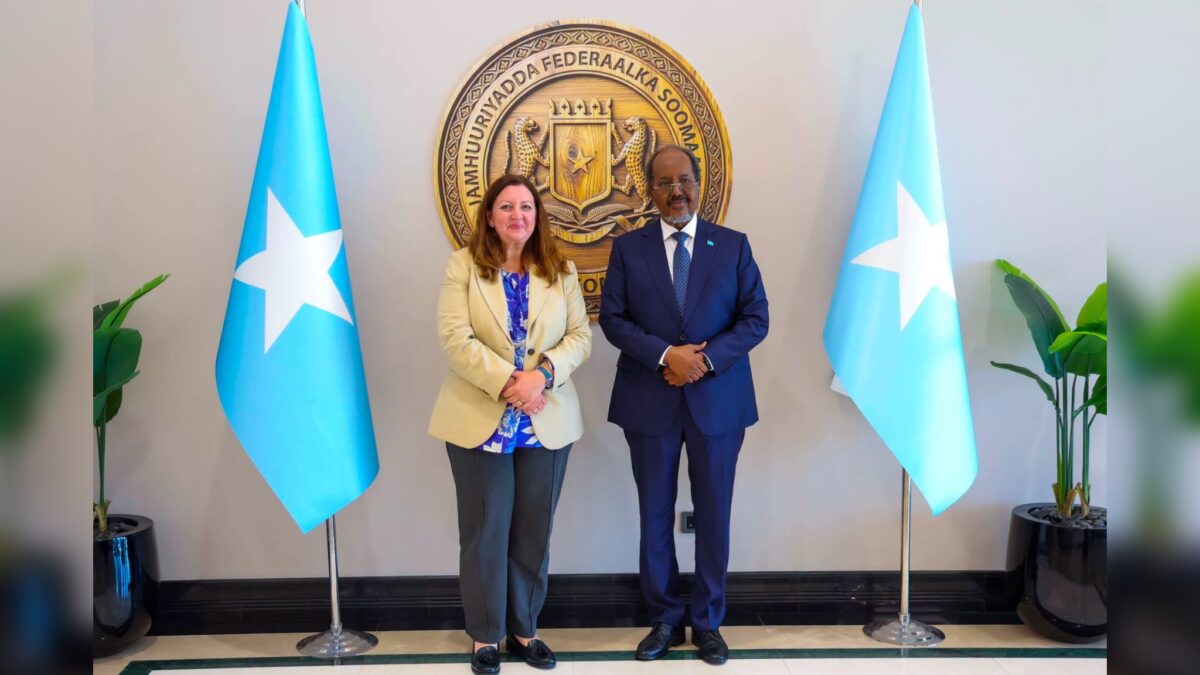
By Hassan Adan
Britain has urged Somalia’s political leaders to overcome their differences and agree on a credible plan for a Somali-led security transition, saying continued progress will be important for maintaining international confidence and support.
McNeill made the call during her first visit to Somalia, where she met President Hassan Sheikh Mohamud in Mogadishu to discuss the country’s political and security priorities.
McNeill called on leaders across Somalia to pursue constructive dialogue, strengthen national unity and build consensus on the country’s political future, according to the British government.
“The UK remains a committed partner to Somalia,” the British government said, while stressing that progress on political dialogue and plans for a security transition would be important in determining future support.
The minister also met officials from the United Nations Support Office in Somalia (UNSOS) and the African Union Support and Stabilisation Mission in Somalia (AUSSOM), where she recognised the role of Somali forces and African Union troops in the fight against al-Shabaab.
Britain said it remains ready to support Somali forces through UNSOS, including with food rations, tents, medical supplies and casualty evacuation.
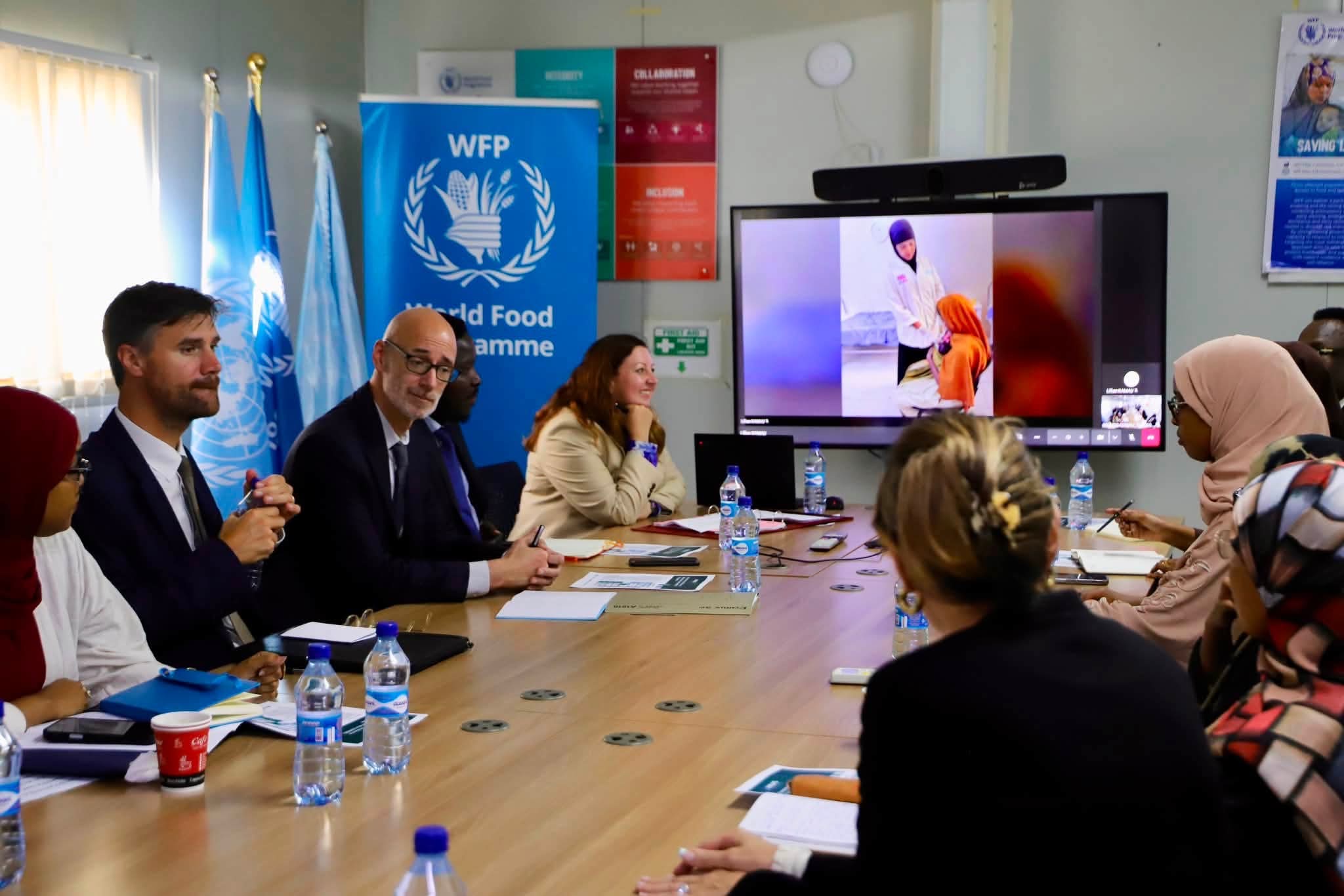
Britain’s Minister for Development and Africa Kirsty McNeill meets humanitarian partners at a World Food Programme (WFP) facility in Mogadishu, Somalia
The British position comes as Somalia’s security transition faces both military and political challenges.
AUSSOM is supporting Somali forces as the country assumes greater responsibility for its own security, while international partners continue to provide logistical and financial assistance.
Recent fighting in Baidoa has underscored the risks posed by political divisions.
Early last week ,The Federal forces clashed with fighters loyal to former South West State President Abdiaziz Hassan Mohamed Laftagareen on Aug. 17, with dozens of people reported killed and wounded.
The violence was linked to wider disputes between Mogadishu and regional political actors over power and electoral control.
The conflict has added pressure on Somalia’s leaders to resolve political disagreements at a time when al-Shabaab remains a major security threat and the government is seeking to strengthen national forces.
McNeill’s visit also focused on Somalia’s worsening humanitarian crisis.
At a World Food Programme warehouse in Mogadishu, she was briefed on British-backed assistance reaching communities affected by drought and food insecurity.
Britain said its humanitarian and climate-resilience support reached more than 950,000 people in Somalia last year.
The World Food Programme estimates that about 6 million Somalis are facing acute food insecurity, while nearly 1.9 million children under five are at risk of acute malnutrition. WFP has warned of severe funding shortages for its operations.
UNICEF said last week that 205 health and nutrition facilities had closed because of funding cuts, worsening access to treatment for malnourished children.
The agency warned that as many as 618 facilities could eventually be affected if funding does not improve.The crisis has been intensified by prolonged drought, conflict and displacement.
Aid agencies have warned that the reduction in humanitarian funding is leaving fewer resources available to respond to growing needs.
Britain has been among Somalia’s longstanding international partners.
It has provided support to UNSOS and African Union security operations, including assistance intended to sustain Somali forces as responsibility for security gradually shifts from international forces to Somali institutions.