By Hassan Adan
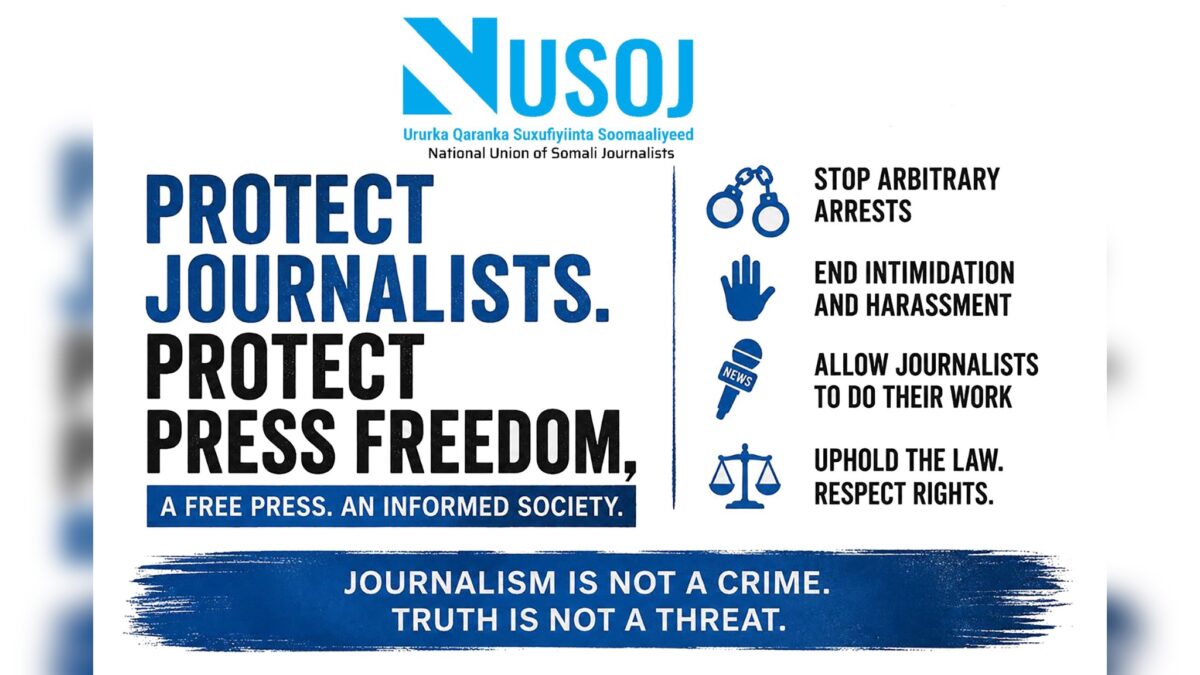
The National Union of Somali Journalists (NUSOJ) has accused Somali security forces of carrying out a wave of arrests, intimidation and harassment against journalists in Mogadishu, saying at least eight media workers from some of the country’s leading news organizations were detained this week as political tensions escalated in the capital.
The media rights body said journalists from Kalsan TV, Goobjoog Media Group, Shabelle Media Network, Somali Stream and Kaab TV were targeted in separate incidents between May 6 and May 8, adding that none of those detained were formally charged, presented before a court, or informed of the legal grounds for their arrests.
NUSOJ Secretary-General Omar Faruk Osman described the arrests as a dangerous assault on press freedom, warning that security agencies were increasingly treating journalists as suspects rather than public-interest professionals.
“These are not isolated incidents. What we are witnessing is a serious abuse of power and a direct attack on media freedom. Journalists are being targeted simply for carrying out their constitutional duty to inform the public,” Osman said.
According to the union, one of the most serious incidents occurred on May 6 when Kalsan TV reporter Ja’far Mohamed Jim’ale and cameraman Noradin Hasan Ali were arrested while covering clashes between residents and security forces during forced evictions in Mogadishu’s Dayniile district.
NUSOJ said the two journalists were initially detained at Dayniile police station before being quietly transferred to another police facility without informing their families or employers, sparking concern over their whereabouts.
The union further alleged that while in custody, the two journalists were subjected to degrading treatment, including forced physical punishment, while some of their reporting equipment—including a camera and mobile phones—was confiscated before they were later released without charge.
The same night, the Media boss said Goobjoog Media Group journalist Rowdo Hassan Abdi Takilo was detained by police while travelling home within the city and held overnight before being released the following day without explanation.
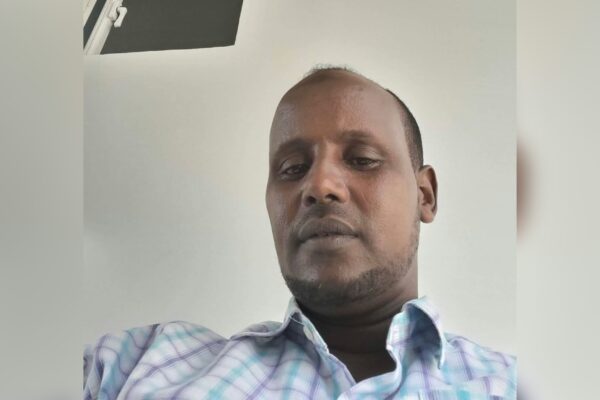
Two other journalists from Shabelle Media Network were also briefly detained in Hamar Jajab district while reporting on forced evictions, while on May 8, officers believed to be from Somalia’s National Intelligence and Security Agency detained three journalists—including Mohamed Ibrahim Bulbul of Kaab TV—at Kaafi Hospital in Wadajir district despite them reportedly being off duty at the time.
The latest arrests come amid rising political tensions in Mogadishu, where opposition groups have announced public demonstrations over forced evictions, governance disputes and growing criticism of the federal government.
The crackdown has also unfolded against the backdrop of the recent detention of social activist Sadia Maalim Ali, whose arrest sparked public debate over civil liberties and the shrinking space for dissent in Somalia.
Rights advocates say the back-to-back arrests of journalists, activists and government critics point to a broader pattern of increasing pressure on independent voices at a politically sensitive moment for the country.
“What is particularly alarming is that these arrests were carried out without due process, without formal charges, and in some cases involved degrading treatment and deliberate attempts to conceal the whereabouts of detained journalists from their families and media organisations,” Osman added.
NUSOJ has called on the Federal Government of Somalia to immediately end what it described as unlawful interference in journalistic work, return confiscated equipment, and hold security officers involved in arbitrary arrests accountable, warning that continued intimidation of journalists could undermine Somalia’s democratic gains and constitutional protections for freedom of expression.