NAIROBI- Kenya has heightened national preparedness and emergency response measures following the regional outbreak of the Bundibugyo strain of Ebola Virus Disease (EVD), as the Ministry of Health intensified coordination with health and development partners to strengthen the country’s readiness against potential cross-border transmission.
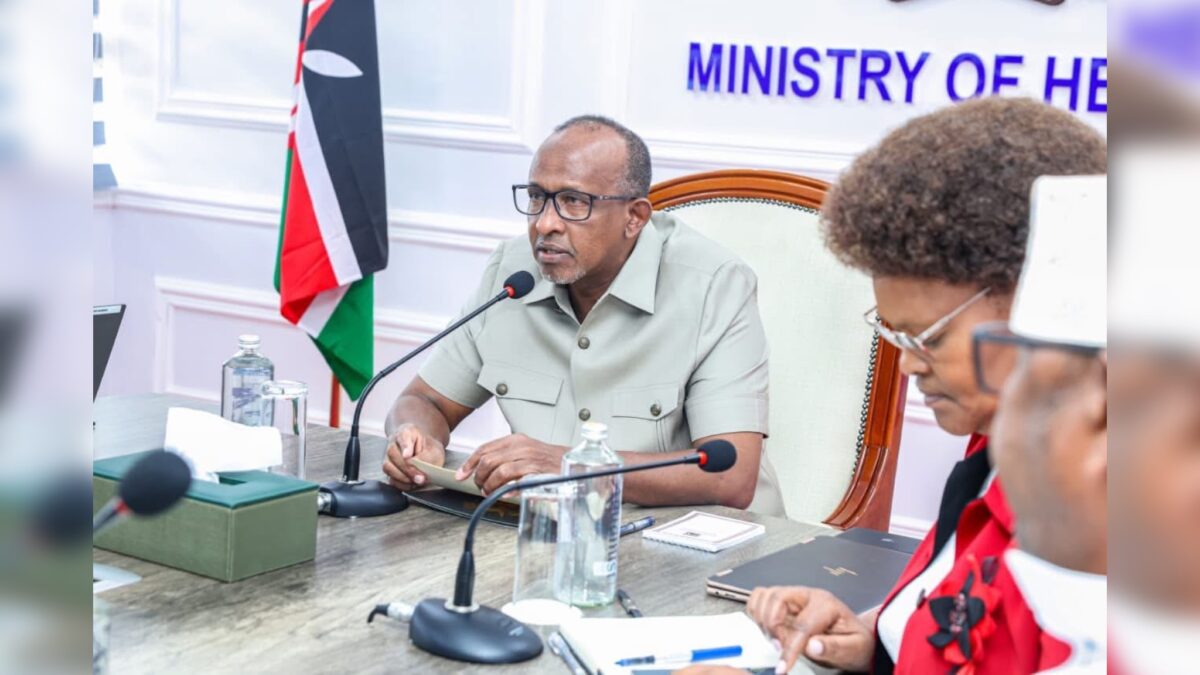
During a high-level preparedness meeting chaired by Health Cabinet Secretary Aden Duale, the Government outlined ongoing interventions aimed at reinforcing surveillance, laboratory testing, border health services, case management, logistics, and public awareness systems.
The renewed preparedness efforts come after the World Health Organization (WHO) declared the Ebola outbreak in Uganda and the Democratic Republic of Congo a Public Health Emergency of International Concern, while Africa CDC classified it as a Public Health Event of Continental Security.
Coordinated through the Kenya National Public Health Institute (KNPHI) under the fully activated National Incident Management System, the Ministry has enhanced screening of travelers at high-risk points of entry and activated emergency response structures across the country.
A large-scale cross-border simulation exercise is also scheduled to take place in Busia next week to assess operational readiness and strengthen coordination systems for rapid response.
Kenya’s four national reference laboratories are operating around the clock to support Ebola testing capacity, while isolation and holding facilities have been activated in designated referral hospitals and border locations to support rapid containment efforts if required.
Public sensitization campaigns are equally underway among healthcare workers, border communities, transport operators, and other high-risk groups to strengthen awareness on prevention, detection, and response measures.
Speaking during the engagement, CS Duale called for enhanced collaboration and support towards emergency financing for personal protective equipment, diagnostics, and border screening infrastructure, alongside technical assistance for surveillance, laboratory systems, infection prevention and control, and emergency operations.
He further emphasized the need to strengthen county preparedness mechanisms, cross-border coordination with Uganda and the DRC, specimen transportation systems, risk communication efforts, and continuous capacity building for frontline health workers and border personnel.
The Cabinet Secretary commended WHO, Africa CDC, US CDC, IOM, Kenya Red Cross, AMREF, UNICEF, and other partners for their continued support in strengthening Kenya’s preparedness architecture.
He reaffirmed Kenya’s commitment to regional collaboration, transparency, and adherence to the International Health Regulations as the country continues working with regional and global partners to strengthen collective preparedness and prevent the spread of the disease.
The meeting brought together senior Ministry officials, development partners, county representatives, emergency response stakeholders, and members of the CECs Caucus.